
By Ed Kim, President and Chief Analyst
Rivian has been one of the most talked-about startup automakers in recent years. It successfully launched the R1 series to great critical and customer acclaim, it has brought many new innovative features to market, its infotainment software work is so good that none other than Volkswagen has partnered with them to develop the German automaker’s next generation software, and it’s about to launch its make-or-break high volume model, the R2, a smaller and more affordable electric SUV that will bring Rivian to the masses.
But Rivian is no traditional automaker, and the company clearly understands that the future of automotive is so much more than just powertrains, platforms, and sheetmetal. The future of automotive is rooted in technology, and Rivian has made technology leadership a core foundation of the company. Already, Rivian has shown its technology expertise through its high-performance EV powertrains and infotainment executions that are among the few in the West that can rival many of the systems in Chinese market vehicles.
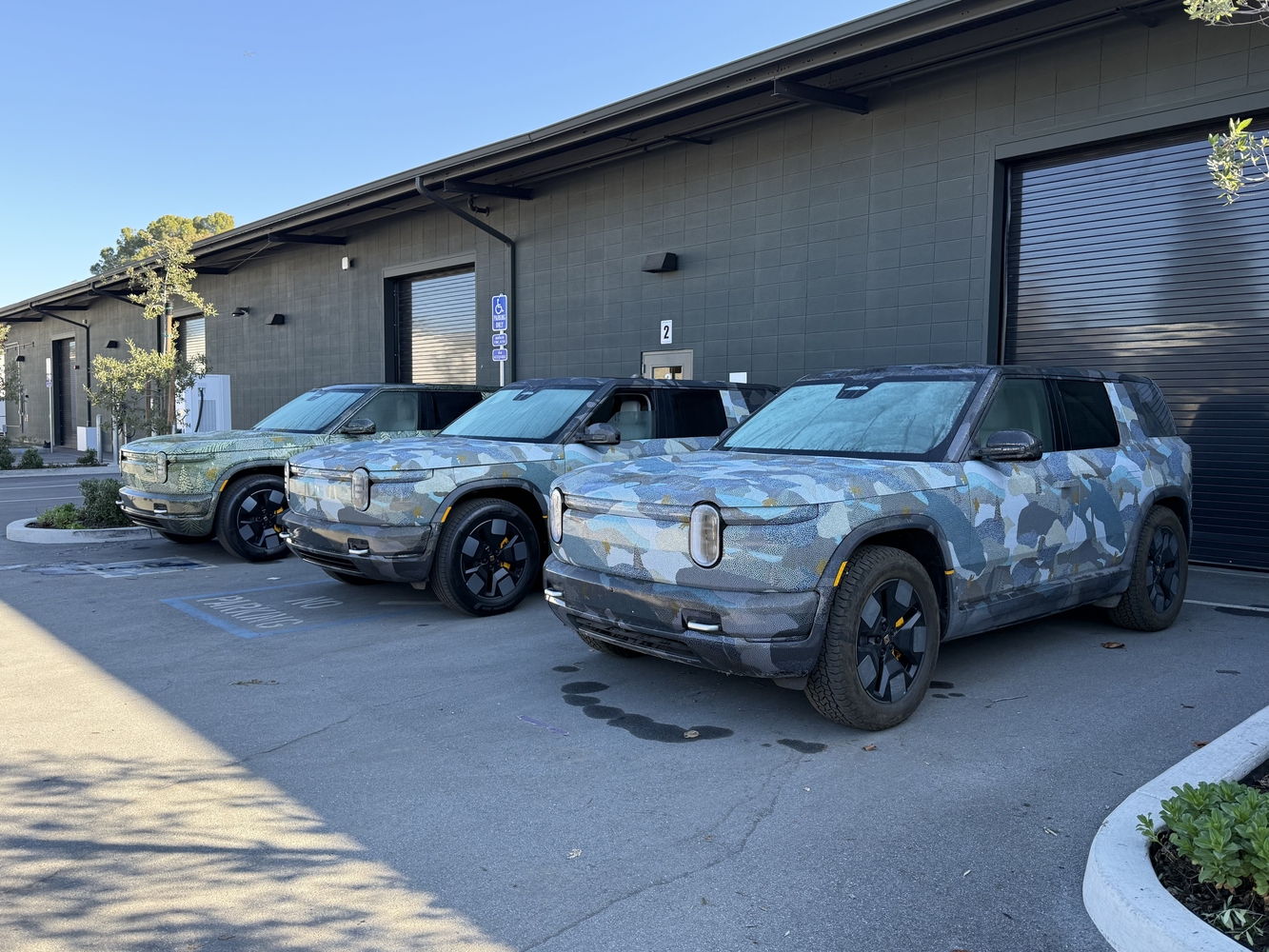
Toward the end of 2025, AutoPacific traveled to Rivian's Mountain View, CA facility to attend the announcement of the next wave of Rivian technology innovations at its Autonomy & AI Day event, and the news didn’t disappoint. In a nutshell, Rivian is going big on AI-powered autonomous drive features and eventually full Level 4 autonomy that is largely enabled not only by in-house software, but in-house hardware too, including its very own silicon - something that the vast majority of automakers do not do.
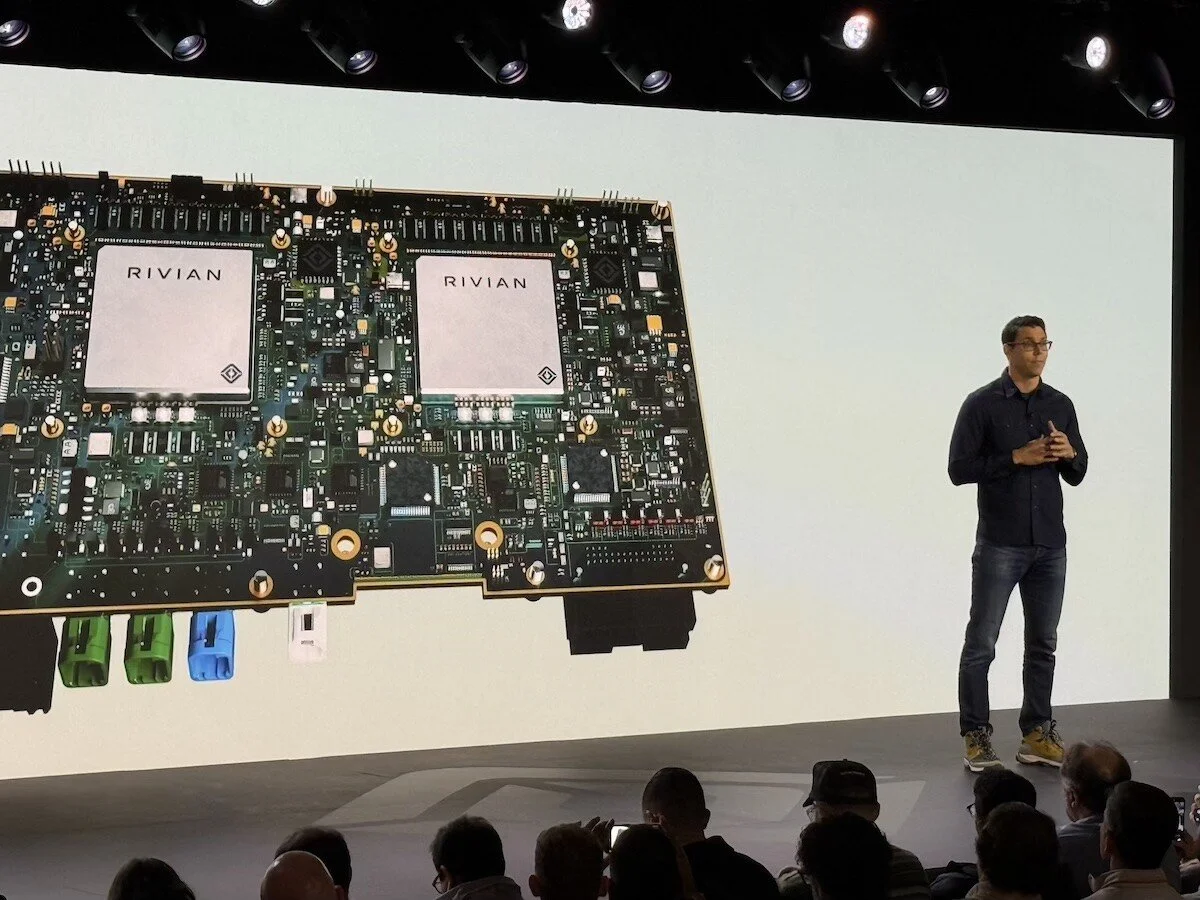
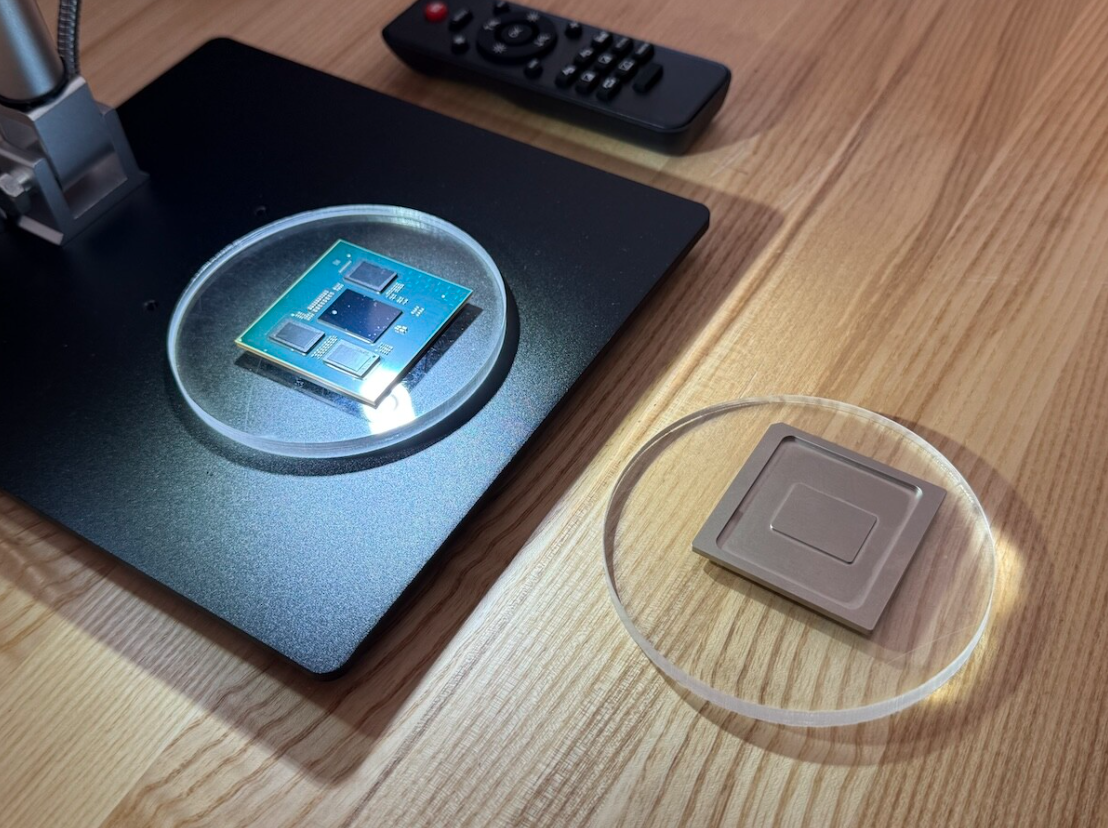
Let’s start there. Rivian announced its new Rivian Autonomy Processor (RAP1), its in-house developed silicon. It powers Rivian’s third-generation autonomy computer called Autonomy Compute Model 3 (ACM3). RAP1 uses in-house developed AI trained by Rivian’s own Large Driving Model (LDM), which is much like a Large Language Model (LLM) used to train AI, but for self-driving. Later this month, Rivian’s post-2025 R1 models (called second generation by Rivian, but more of a mid-cycle enhancement) will get “Universal Hands-Free” via an OTA update that will greatly expand these models’ hands-free capabilities from 150,000 miles of highway today to 3.5 million miles of both highway and local streets. Much of this is enabled by AI; Rivian says that as long as there are marked lines on the highway or street, Universal Hands-Free can figure it out. It’s packaged as Autonomy+, and it will cost $49.99 a month, or a flat one-time cost of $2,500.
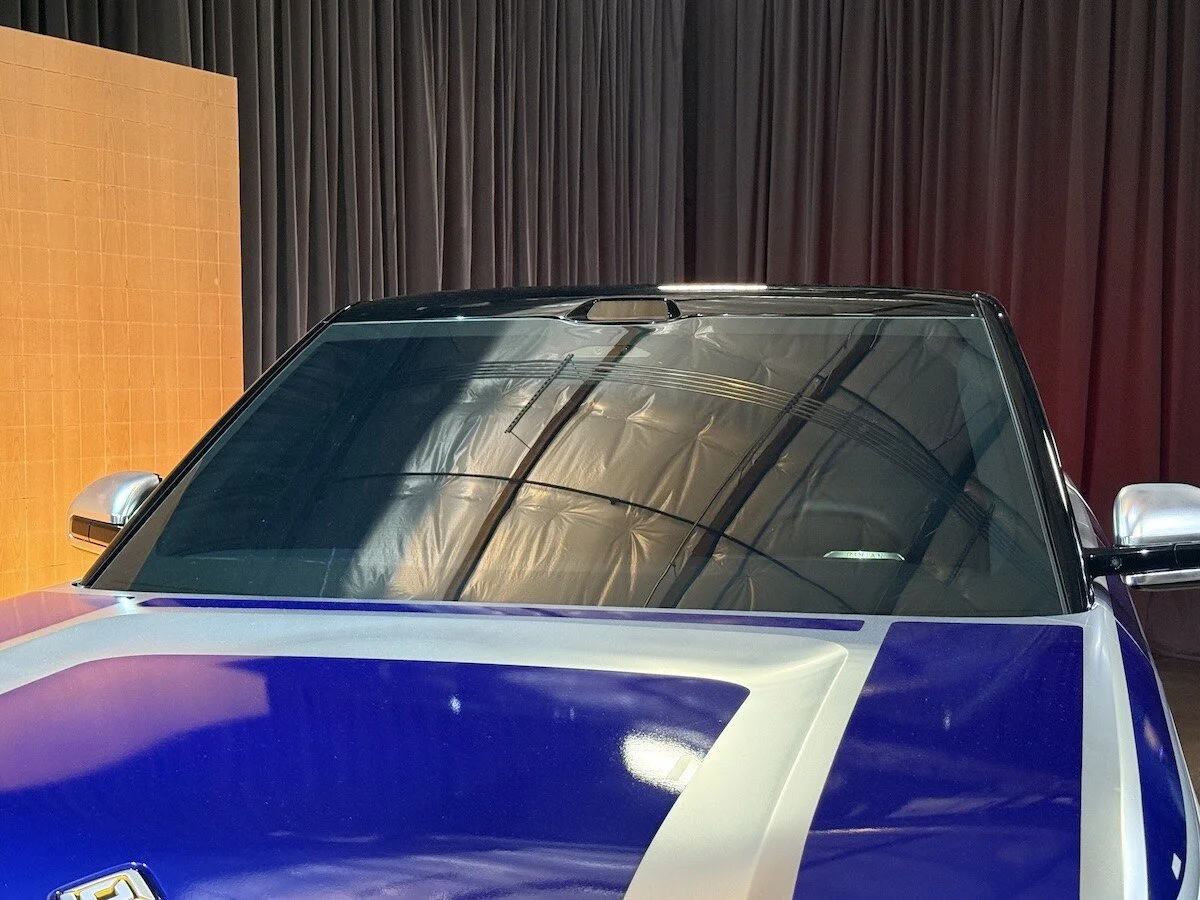
On the R1 and on early R2 models, hands-free driving is still L2+, meaning that while the driver does not need to keep their hands on the wheel, they must keep their eyes on the road and be able to take over anytime. Later in 2026, R2 models will gain Lidar cleanly mounted just above the windshield header, which will enable point-to-point hands-free driving, eyes-off driving, and personal L4 autonomy.
What is personal L4? It’s L4 that’s for the vehicle owner, rather than current L4 implementations designed for shared robotaxi applications. Personal L4 will allow the Rivian owner to have their vehicle pick up groceries or take their kids to school, all without anyone in the driver’s seat. If today’s biggest luxury is time, then personal L4 could be one of the most important luxury features ever devised for a vehicle.
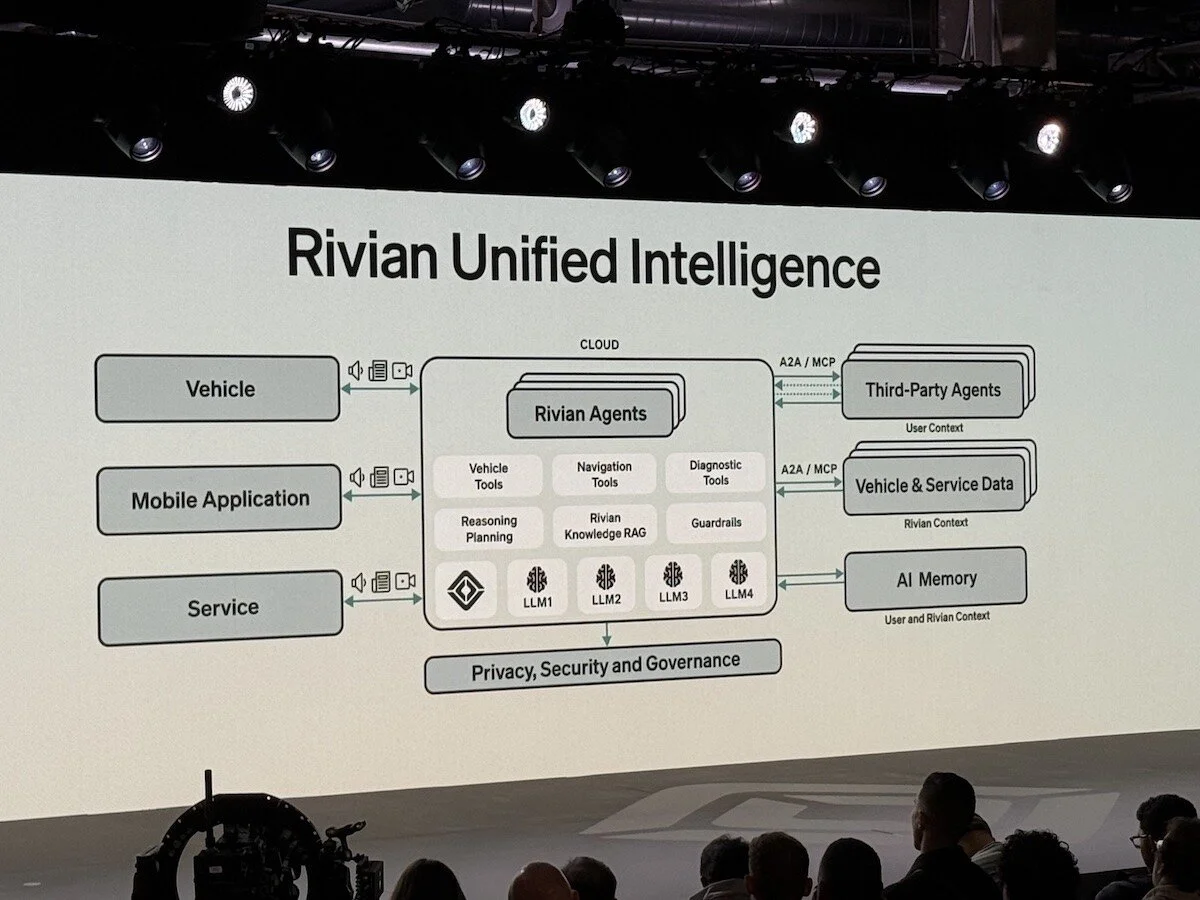
AI also powers Rivian Unified Intelligence (RUI), allowing far more seamless interactions between the driver and vehicle. The LLM data foundation allows for truly conversational interactions that involve multiple commands and clarifications, and it will also be able to have the vehicle seamlessly interact with third-party apps; Google Calendar will be the first to be have integration with RUI.
It’s certainly unusual for an automaker to tackle all these traditionally non-automotive technology areas in-house, begging the question as to why Rivian would go this route. Simply, Rivian says that this level of vertical integration enables much faster development times since they aren’t going back and forth with outside hardware and software development partners, and it allows Rivian to evolve all these features and technologies in a much more holistic way that keeps the continued evolution of entire vehicle experience in mind, rather than just being focused on individual features and technologies.
It also potentially makes Rivian an automotive technology supplier. Rivian officials at the event mentioned that the company would be willing to sell its technologies to other automakers, and certainly Rivian’s current partnership with Volkswagen to develop software adds legitimacy to its stated abilities. Of note: all of the technologies that Rivian announced are Rivian’s own intellectual property that is not shared with Volkswagen. Volkswagen is certainly free to buy these technologies from Rivian, but the current agreement between the young upstart and the veteran German automaker does not include the sharing of any of them.
In the end, Rivian is going down a brave path that does seem achievable. Its growth goals are more ambitious compared to most of the Western startups we’ve seen because they comprise so much more than just selling lots of electric vehicles. Rather, Rivian aims to be at the forefront of automotive technology, particularly in the fields of AI, autonomy, and even hardware and software. Embracing technology as a core tenet of automotive served Tesla well over the years, and it’s serving many of the newest Chinese automakers well, too. Those Chinese automakers aren’t in the U.S. market yet, and trade tensions between the two economic giants mean they won’t be here for some time. This provides Rivian with lots of untapped white space in North America, and provides Rivian with not only vertically integrated vehicles, but a more diversified business as well.
From AutoPacific’s perspective, Rivian is making smart moves by taking leadership positions in automotive technology development to help ensure its survival in a market that is currently brutal to both EVs and startup automakers.