
By: Robby DeGraff, Manager of Product and Consumer Insights
A quick peek at the history books will reveal that Lucid has been a presence in our industry for about a decade now, ever since the startup debuted a prototype at the 2016 L.A. Auto Show of the current Air. Fast-forward to 2021, and the brand began assembling production versions of the stately sedan for global customers at its Casa Grande, Arizona, plant. Then the Gravity went on sale last year as a three-row, higher-riding sibling to the Air, and after a slow rollout, deliveries of the crossover are finally beginning to pick up. In fact, compared to 2024, Lucid shipped 15,841 vehicles in 2025, and the California-based automaker intends to almost double that in the coming twelve months to 25,000 to 27,000 units. A whopping 42 worldwide store spaces are on the docket, too, including a direct aim at the European market, where Lucid has German rivals in its crosshairs.
Building cars isn't an easy task, and while more Airs and Gravitys are finding buyers, there's a long road ahead for Lucid, which must demonstrate its intentions to not just remain relevant, but become profitable amidst a time where the EV market is somewhat of a precarious place. Last month, AutoPacific had front row seats to Lucid's first-ever Investor Day event, in which a select group of analysts and journalists were joined by a crowd of hungry investors. On a rainy Thursday morning, we learned what's next for the ambitious startup, a chapter soon to be written with new arrivals of mid-size EVs and a strong focus on bringing autonomy to the masses. Each strategy promises additional revenue opportunities and hopefully turns around the sizable cumulative $2.7 billion net loss it saw in 2024 and 2025. The monetary pulse funded by the Saudi government can only beat for so long.
Needless to say, there's a lot on the line for Lucid, so let's break it down.
The Mid-Size Monopoly.
Larger, expensive sedans and crossovers, despite an uptick in deliveries, can only carry the brand so far into the future; fresh products that are more attainable are critically needed. Rivian mirrored this approach with its R2, Tesla took to this angle after the Model S and Model X- now it's time for Lucid to follow suit.
During the presentation, Lucid's Senior Vice President of Design and Brand, Derek Jenkins, revealed that a trio of new, mid-size crossovers would be inbound starting later this year. Each of these three models targeting their own unique buyer profile and underpinned by a shared, newly developed platform (more details below) that takes all of the impressive engineering masterwork demonstrated via the Air and Gravity, down a few notches.
Bowing as Lucid's third model and first real volume product, will be the sub-$50,000 Cosmos, a mid-size crossover aimed at what Jenkins referred to as "Upscale Nurterers," or in simple language: for upscale millennial parents in urban settings. It arrives to battle the Tesla Model Y for our 2027 MY with production kicking off later this year at Lucid's plant in Saudi Arabia, which in addition to building units for our market, will fulfill orders for the Saudi market, including a large government order, as well as production for European and other global markets. Lucid assured us that U.S. sales of the Cosmos won't be interrupted. Within six to twelve months following SOP in Saudi Arabia, Lucid's stateside assembly plant should be revamped to accommodate domestic production.
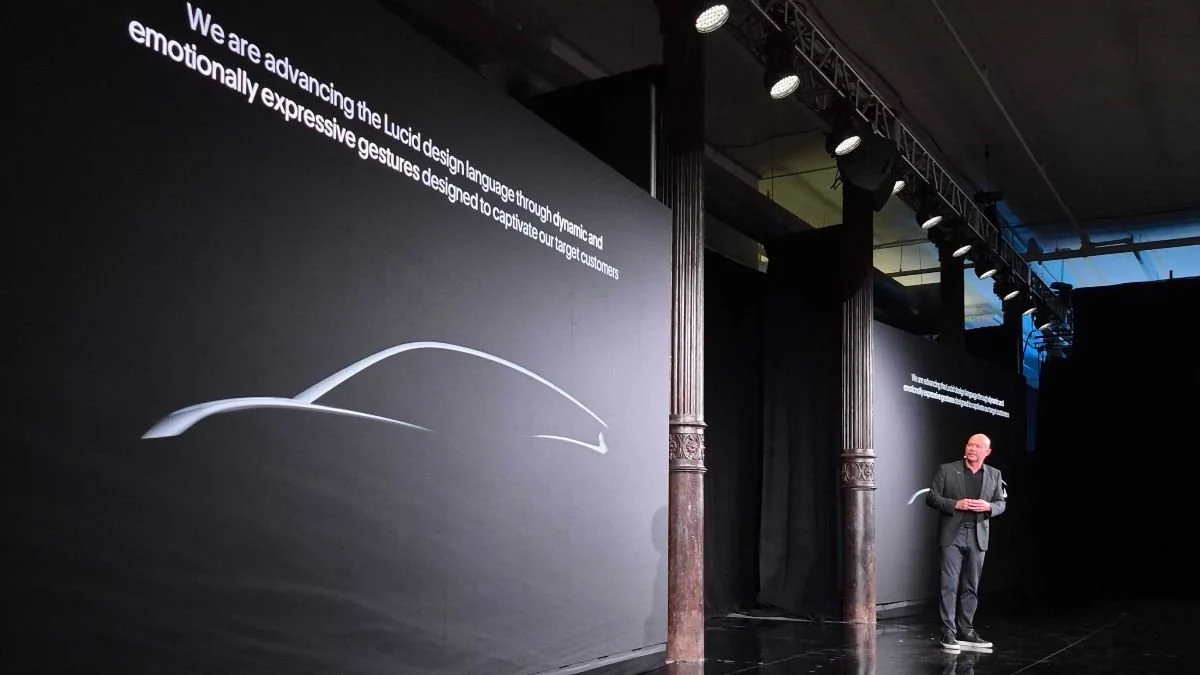
Senior Vice President of Design and Brand, Derek Jenkins, revealed Lucid's three new mid-size EVs.
Super-sized on the inside but mid-size on the outside, AutoPacific was able to view a production-intent Cosmos behind closed doors, where the brand's new styling approach for its first-coming mid-size crossover was clearly more minimalist, even sleeker than the already-attractive Air and Gravity. Per Lucid's top brass, the Cosmos should achieve a slippery coefficient of drag below 0.22.
Up front, expect a cleaner fascia with razor-thin headlights that feature a unique lighting approach in which the beams are down within the housing and project up to a wall of mirrors. Lucid told us this execution not only reduces cost but also boosts lighting efficiency. There aren't many air inlets, except a smaller rectangular block at the center of the bottom chin, and a power frunk opens to reveal a very large hard-plastic-lined space to haul things. The sides are smooth, with low beltlines, and a very cab-forward silhouette, ensuring maximum vision out the front driver's seat and very easy egress/ingress. Interestingly, and perhaps a relief to many, the Cosmos features actual mechanical door handles, inside and out, rather than power-deploying or e-lock type.
At the rear, the liftgate's actual opening extends forward in the roof for greater access and usability, where there's a two-level load floor: one setting flush with the bottoms of the rear seats, the other revealing a deep storage well in the floor. Lucid touts up to 24 percent more cargo space in the Cosmos than its closest competitor. A set of cloth pull-handles in the sides of the cargo area drop the 60/40 split bench seat. A NACS charging port is mounted above the rear bumper and further inset near the rear wheelwell on the driver's side, again, strategically placed for lower repair and replacement costs, as is the positioning of where the rear liftgate's bottom meets the rear bumper. Expect an entirely new paint palette, too, compared to the Gravity and Air's various California-themed hues and interior design cues.
A look inside the Cosmos' cabin, through its very wide-opening (90-degree) frameless doors and very low step-over entry points, revealed a refreshing, upscale interior with fabric upholstery on the doorcards, a single 36-inch screen below the windshield (not in front of the steering wheel), similar physical controls in the center for various HVAC and volume adjustments or tuning, HVAC vents adjustable via the touchscreen, and underseat storage in the rear. Lucid told us the doors don't have speakers, and instead of a lower center comfort display screen that power-hides itself into the dash, the Cosmos's sole screen setup is befitting of the "Clear Cockpit" ethos.
Being a self-proclaimed "technology-obsessed company", Lucid ensures the Cosmos and other mid-sizers will pack bleeding-edge tech, too, promising innovative ways for occupants to stay social and engaged with each other using their phones. There are also unknown AI components that are integral to the experience offered by this vehicle, and a confirmed usage of Nvidia's full stack of chips and tech for ADAS features, including, at some point, full-on driverless capability. Specifically, starting with this yet-to-be-named midsize crossover, Nvidia's Drive AGX Thor computers, Drive AV autonomous software, and DriveOS operating system. Note that once up and running, this will likely be one of the first vehicles on sale to offer true hands-off, eyes-off driving capability to consumers. The Cosmos will also use Lucid's latest UX 4.0 infotainment with immersive AI voice-assist, demonstrated to really acknowledge and respond to very natural commands from occupants.
From the get-go, Lucid confirmed the Cosmos will launch with hands-free "Level 2+" autonomy, followed by eyes-off "Level 3" capability in 2028, then "Level 4" the next year. This is part of the startup's new major focus of achieving profitability by offering autonomy in two executions: for consumers and owners of its vehicles, via $69-$199 monthly subscription services, as well as via a fleet of robotaxis (that will share roots with this crop of new mid-sizers). Lucid has already found success in having 40% of Air owners and 65% of Gravity owners raise their hands for the DreamDrive Pro ADAS suite.
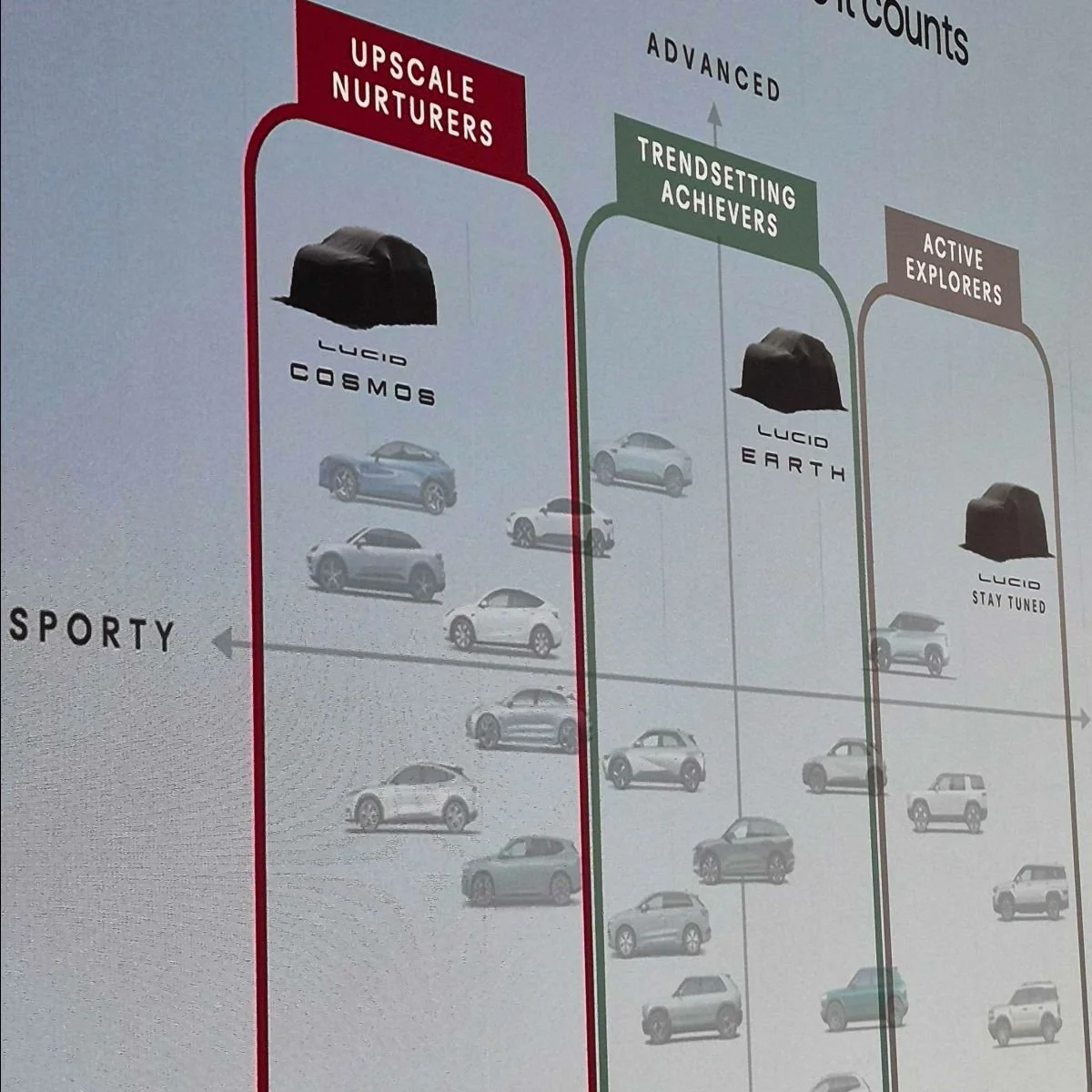
A peep at Lucid's mid-size roadmap.
Following the Cosmos, 12 months later, a coupe-like version will join for our 2028 MY. Bearing the name "Earth", it'll share its roots and most design elements with the Cosmos, albeit with slightly less cargo capacity due to the slooped roofline yet better overall range. After that, Lucid has confirmed, likely for our 2029 MY, a more rugged, boxier adventure-focused crossover coming at the end the decade to battle Rivian's R2. Its name is TBD.
Notably, all three of these new electric mid-sizers will apply learnings and philosophy from the Air and Gravity, particularly in the sense that it will focus on platform and powertrain efficiency to get excellent performance and range, and in this case, an affordable price that Lucid is targeting to start below $50,000. Lucid told us there's essentially zero carryover parts from the larger Air and Gravity. Everything is fresh. Rather than taking a more "advanced" and simplified gigacasting approach like Tesla and some other automakers have done with various EVs, Lucid remains committed to megacasting for its trio of new mid-size XSUVs. The rationale? Not needing to "follow the trend". In a bid to retain structural rigidity and keep costs in check, Lucid is taking a more megacasting approach using high-strength stamped steel and aluminum extrusions and castings. This also means owner repairability and insurance costs will be kept slimmer, with Lucid touting savings of up to $1,000.
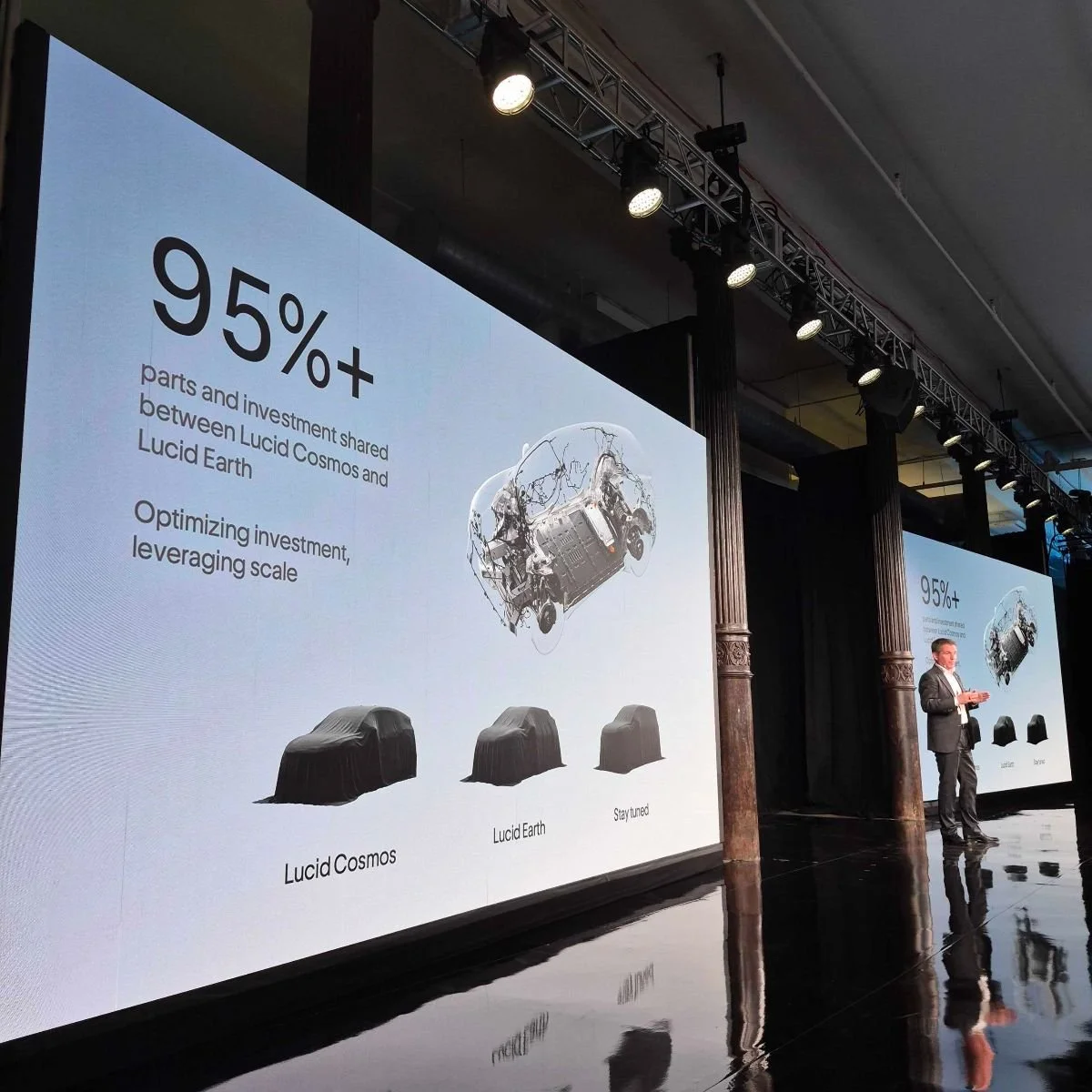
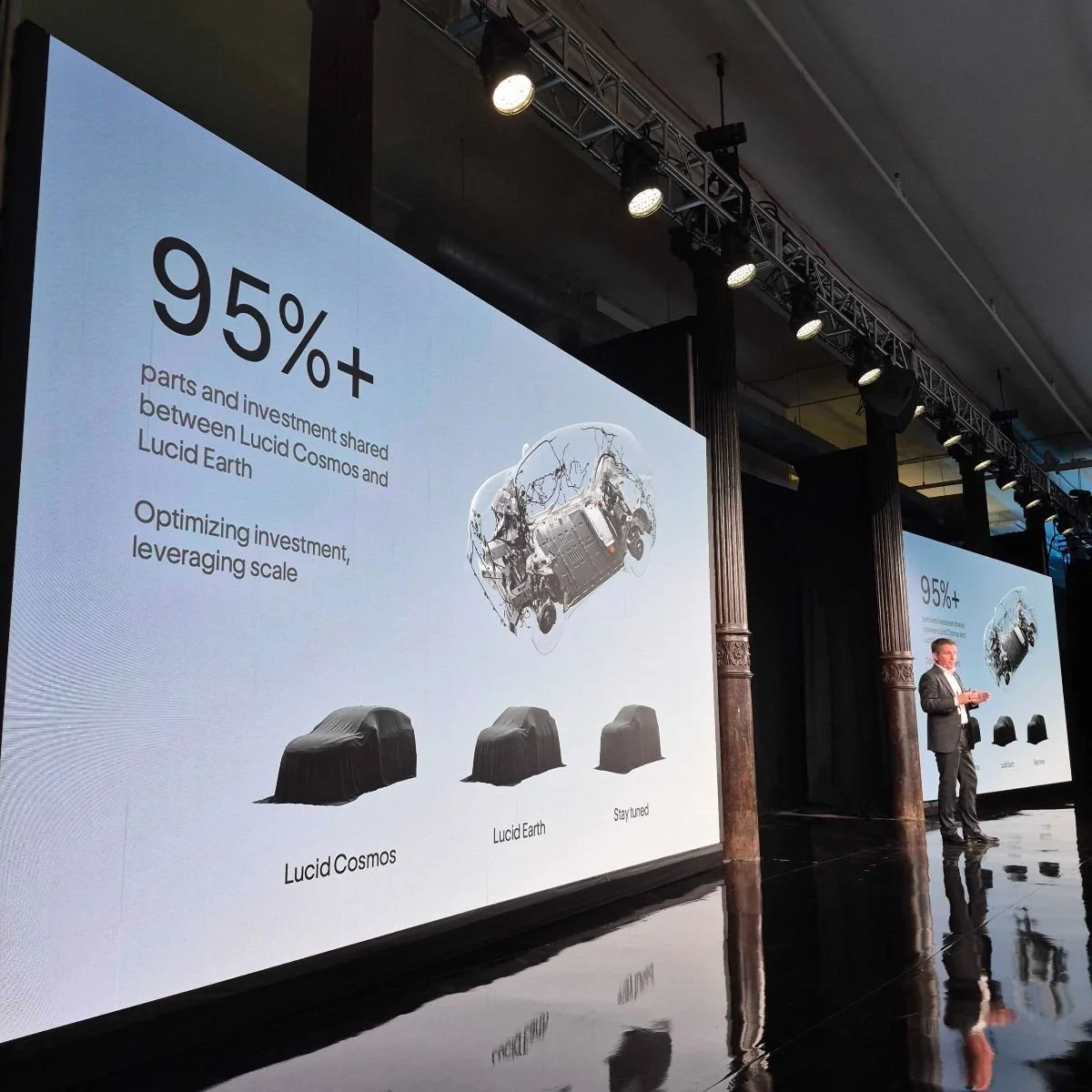
CEO Marc Winterhoff explaining the generous amount of commonalities between Lucid's Cosmos and Earth.
Furthermore, with what Lucid told us is their intention of "radical efficiency" via an emphasis on minimizing parts usage and count, the Cosmos makes do with a heck of a lot less wiring (40% per Lucid), nearly 60 percent of what's found within the Gravity, resulting in not just big cost savings (nearly 60% less). The Cosmos has only three ECUs, too, a sharp contrast compared to the dozen in the Gravity. Despite its more attainable, affordable, and smaller footprint, the Cosmos and other upcoming mid-sizers will all use an 800V architecture, rather than a 400V as seen on other rivals, for much faster DC fast charging.
Specifically, it will incorporate high-efficiency patented electric drive unit technology in the Air and Gravity. The new "Atlas" EDUs will make 335 HP and should promise spirits to 60 mph in as little as 3.5 seconds in the dual-motor footprints. These new EDUs allow Lucid's various upcoming mid-size vehicles to achieve massive range and efficiency figures, like 4.5 mi/kWh max for RWD specs (4.3 for AWD), without resorting to oversized battery packs. Compared to the outgoing "Zeus" EDUs found powering the Air and Gravity, the new Atlas EDUs (identical regardless of location in the vehicle) are even more compact, lighter (by up to 23 percent), feature 30 percent fewer parts, and boast an impressive 4.9 horsepower-per-kg ratio, some 40 percent better than a comparable mid-size electric crossover.
There's a chance the Atlas EDUs could trickle their way into the Gravity and Air, too at their scheduled refreshes, or, if Lucid decides to approve next generations of both models. We were told not to anticipate the Air going away anytime soon, as Lucid sees an exciting opportunity, perhaps a hair too optimistic, to continue conquering Model S and Model X buyers now that Tesla has canned both nameplates.
Back to the battery packs, while we don't know their specific chemistry, sizing, or other key figures, the battery prices themselves are said to be very competitive and cost-efficient, thanks to clever reengineering and shaving nearly 80% non-cell parts. In the case of this volume electric crossover, Lucid will reportedly build on this philosophy by fitting the smallest battery pack possible, which, in conjunction with the patented electric powertrain tech, will allow it to achieve a class-competitive range. Theoretically, these electric crossovers could have the smallest battery pack while maintaining a competitive (but not necessarily class-leading) range. The potential benefits are grand: due to the smaller battery pack, it could end up being lighter than the competition, equating to better performance and handling. Just as importantly, it will likely make the vehicle very cost-competitive because less of the vehicle's total cost will be tied up in the battery pack. Expect vehicle-to-home, vehicle-to-load, and vehicle-to-grid capabilities, too. We don't know specific charging rates or limitations, but Lucid tells us the Cosmos should recharge 200 miles of range in about 14 minutes, and reportedly, again circling back to the startup's ultra-efficiency efforts, needs just 69 kWh of energy to travel 300 miles.
Lucid touts its Cosmos, and expectedly, the other mid-sizers feature a cell-to-pack construction, mounting the battery cells immediately in the battery enclosure, rather than putting them in the modules in the pack itself. This approach also means that the top of the battery pack isn't the actual full-length and width floor of the cabin, but rather just in sections, as there appeared to be cutouts in the metal flooring for the passengers' footwell.
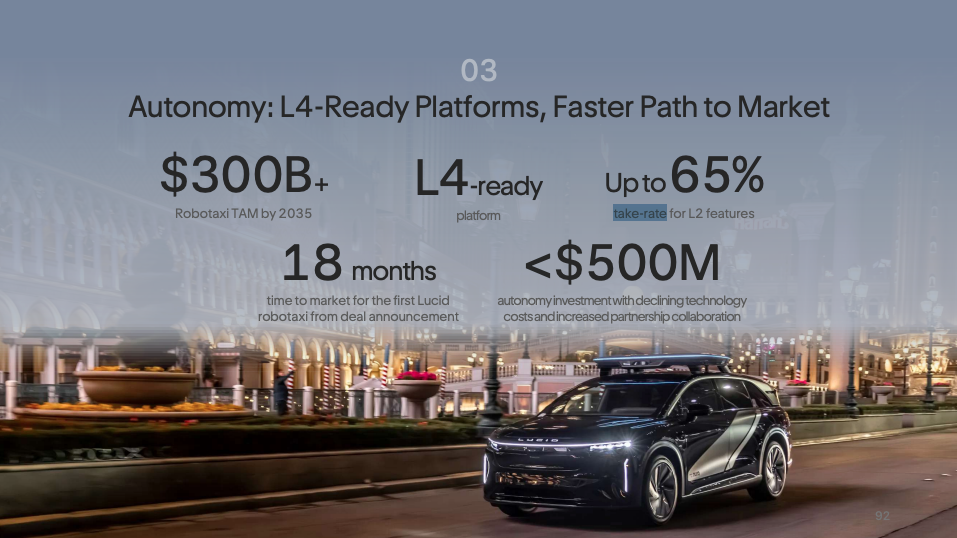
Lucid aims big for AV business internally and via a partnership with Uber.
Autonomy for All.
With a trio of new, compelling and mass-market mid-size crossovers confirmed for launch, the second ingredient for Lucid's long-term stability and success is a two-pronged push for autonomy: robotaxis and personal autonomy.
An investment in autonomy is undoubtedly a wise investment in the future, and Lucid has already triumphed in bringing its own Level 2 hands-off, eyes-on system to market ahead of several other well-established, legacy automakers. Currently available on the Air and (very) soon on Gravity, DreamDrive Pro uses more than 30 sensors and cameras to provide hands-off driving and automatic lane changes on the highway. It works pretty well, as AutoPacific sampled it months ago in a 2026 Air Touring and found its performance closely matching that of GM's Super Cruise or Ford BlueCruise. Lucid owners have reportedly eagerly raised their hands for greater levels of the brand's DreamDrive ADAS suite, including costlier DreamDrive Pro, with that take-rate being 65% between both models.
In the coming years, Lucid sees a clear path for bringing in more profit by selling subscription services for various levels of its in-house autonomous driving tech found on its vehicles. Per Kai Stepper, VP of Autonomy and Advanced Driver Assistance Systems, starting in the first half of 2027, Cosmos, Gravity, and Air owners will have the chance to sign up for tiered DreamDrive Pro monthly subscriptions, ranging from $69 for a basic eyes-on point-to-point Level2++ all the way north to a more-removed, more autonomous Level 4 for $199. The automaker is gunning for true and tested "eyes off" L3 capability by 2028 and "mind-off" L4 by 2029, those systems made possible with help via collaboration with expert outsiders like NVIDIA.
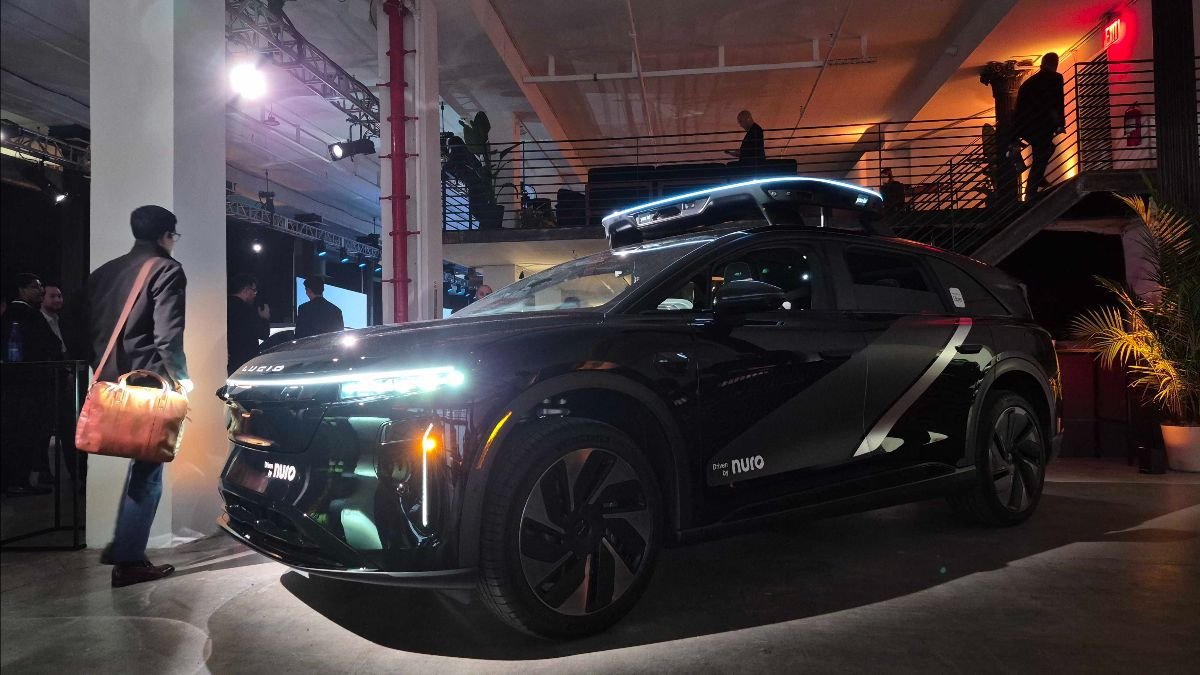
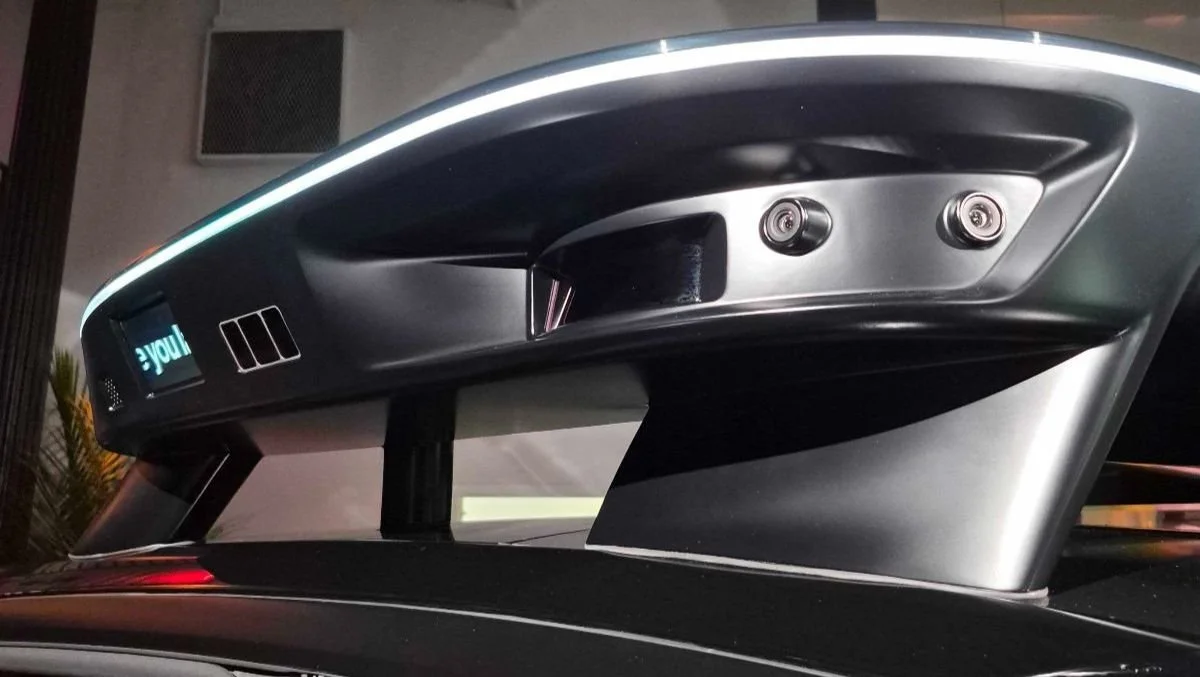
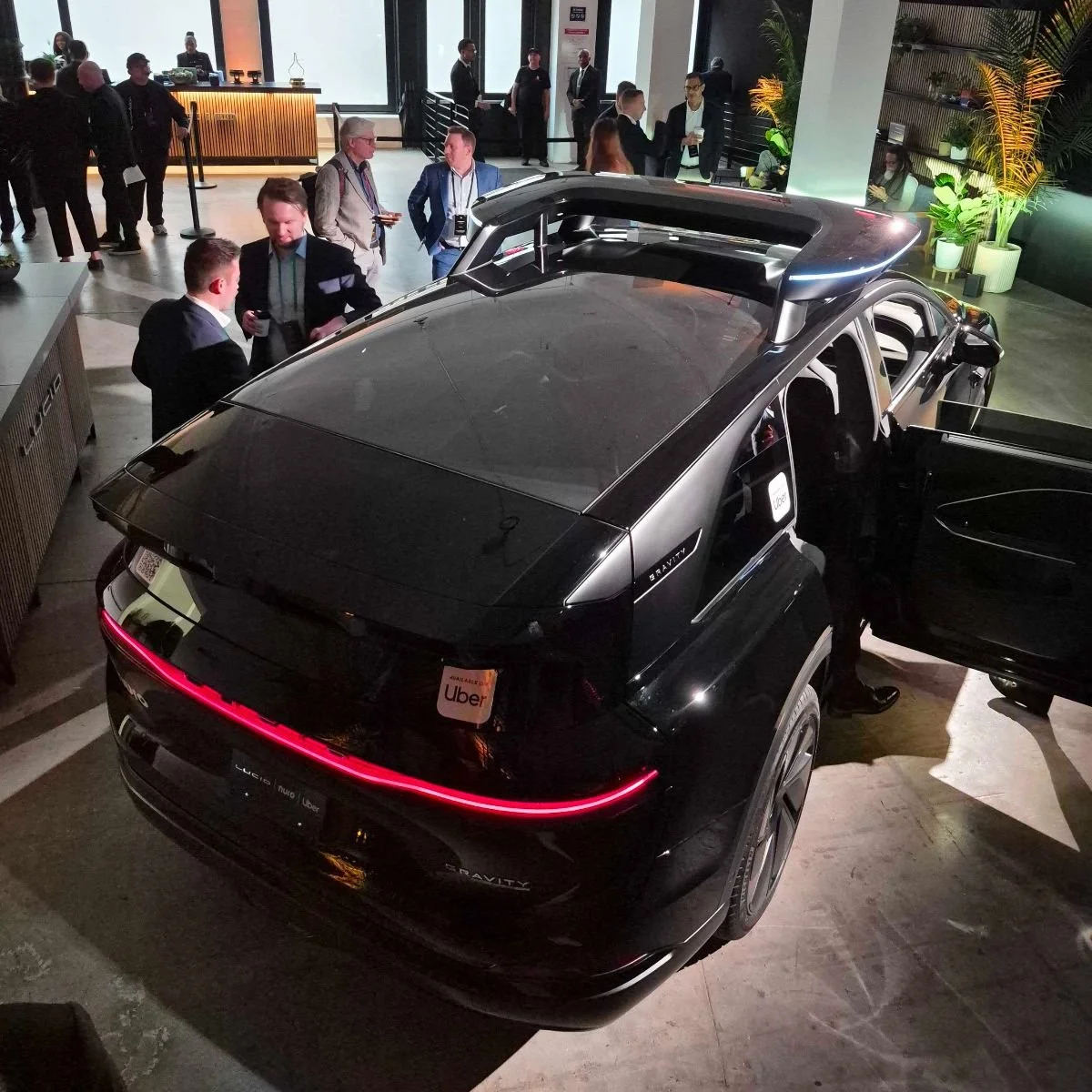
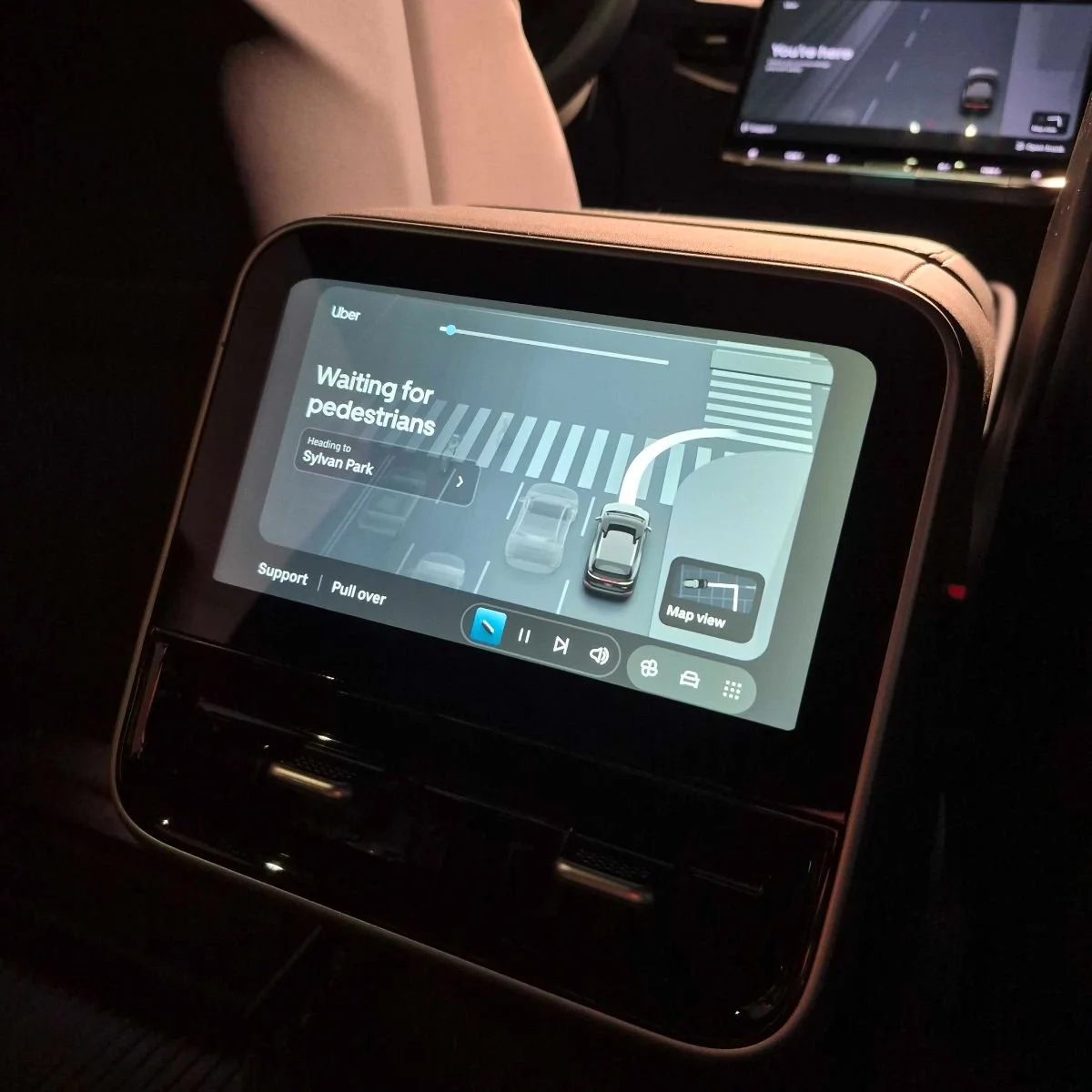
Beyond consumers' own vehicles, Lucid sees a massive revenue opportunity for broadening its AV offerings to robotaxis. Why? Because of the sheer speed of bringing L4 autonomy to our streets and highways at a staggering pace. Thanks to a lucrative partnership and deal with Uber and Nuro, Lucid is on track to rapidly scale its robotaxis within the next two to five years. In fact, by 2028, the startup is forecasting for a sizable chunk of its revenue to account for that of various robotaxi and B2B partnerships.
The secret lies within the Gravity, already wired and set up for Level 4 autonomy, enhanced by an even more advanced software stack from Nuro and in-cabin UX via Uber. We saw an example of Lucid's Level 4 robotaxi at the Investor Day event, wearing a crown of radars, sensors, high-resolution cameras, and LiDAR atop its sleek roof, ahead of when real-world testing starts later in the year in the San Francisco Bay Area.
Uber is so confident in the relationship with Lucid for its robotaxis that the ride-sharing king has committed $300 million to buying some 20,000 units of the aforementioned Level 4 rig. The partnership will progress too, to in time include Lucid's upcoming mid-size electric crossovers we learned about earlier, scaling development of that as quickly as they can, as well as possibly an all-new, two-seat dedicated robotaxi. Catching us all by surprise, toward the end of the Investor Day presentation, CEO Marc Winterhoff ushered Uber's COO and President, Andrew Macdonald, toward a prototype of an out-of-the-box two-seat robotaxi concept called "Lunar" that had been hiding behind the curtains. The concept, using a shortened version of Lucid's newly developed mid-size platform for the Cosmos and others, sported a minimalist, open, and airy cabin with two bucket seats and room for luggage behind, and a single expansive touchscreen in place of a steering wheel and pedals.
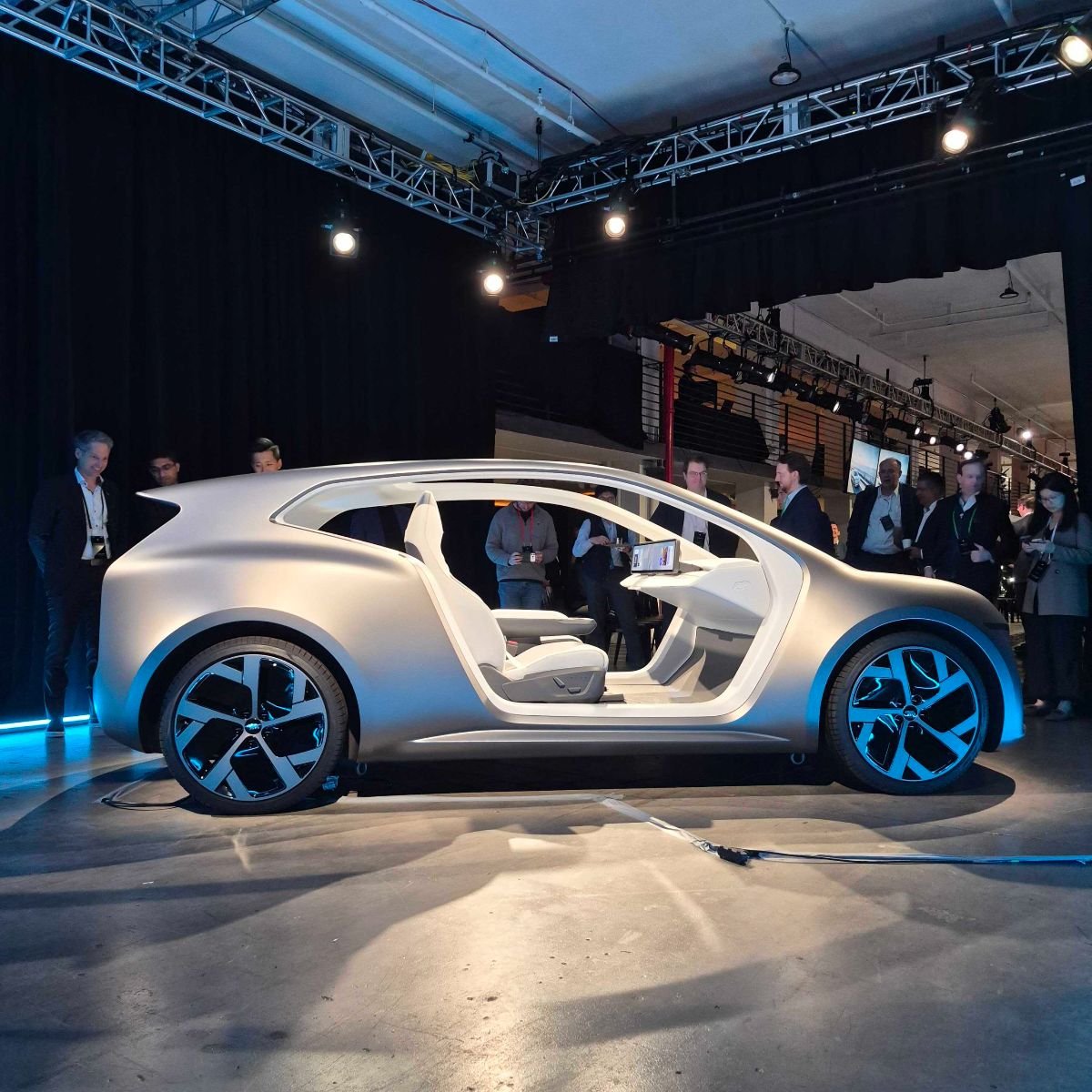
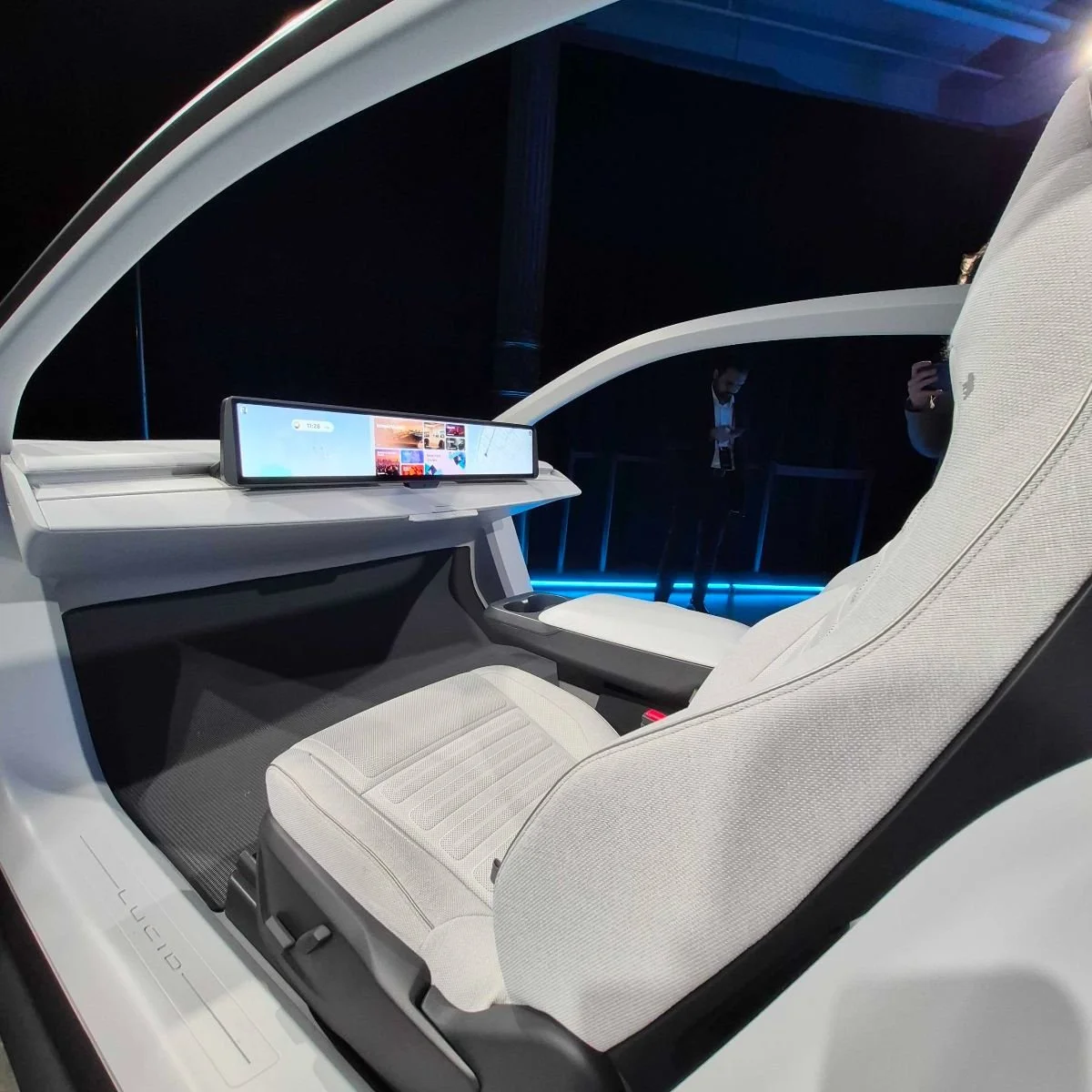
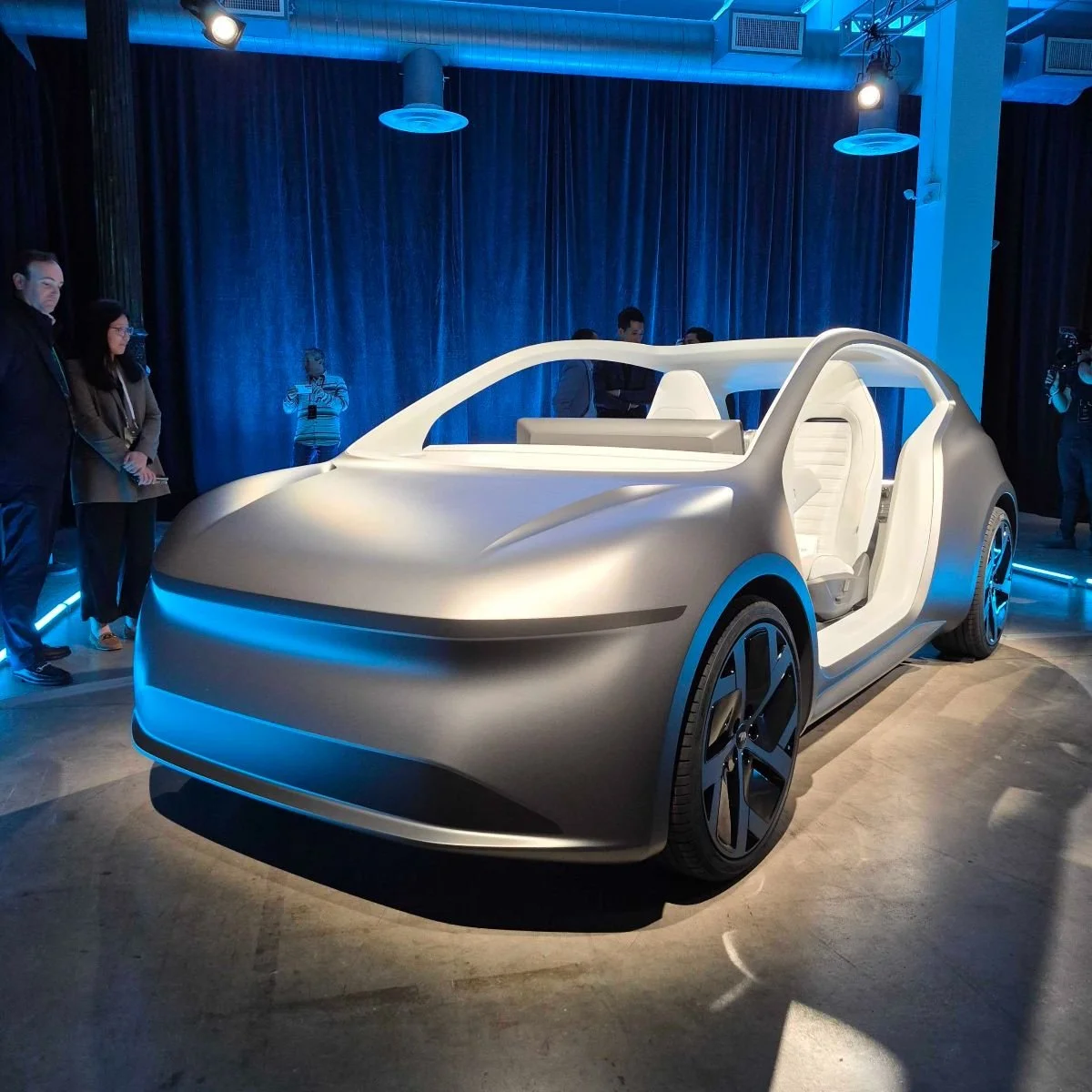
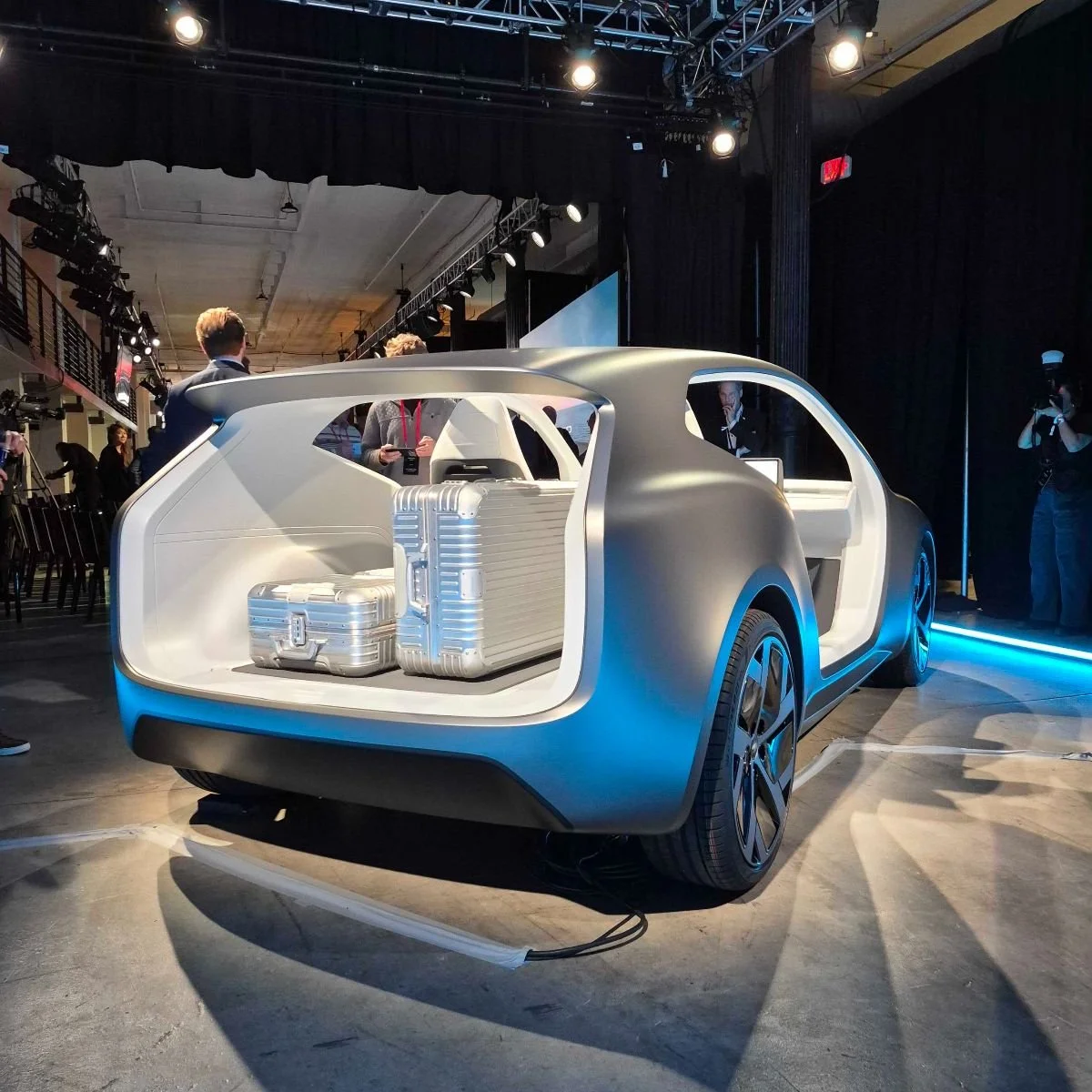
Surprisingly many, Lucid's Lunar concept, like the polarizing robotaxi concept Tesla showed at its investor day event (though currently Tesla is testing Model Y "robotaxis" in select markets), only had room for two occupants. At first thought, offering only two seats appears limiting for a robotaxi; however, we were assured there's data to support the need, suggesting most ridesharing in general services one or two occupants. Lucid also told us that by keeping its modular robotaxi's footprint to that of just two occupants, operating costs can be kept slimmer, too, a reduction of up to 40%. In fact, Lucid pegs its energy efficiency (targeting 5.5 to 6.0 mi/kWh), longer range, and faster charging (200 miles in 15 minutes), as reducing both maintenance and repair costs. This, in turn, means less downtime, an important must for rideshare operators as demand for robotaxis in crowded areas begins to boom.
Sure, some of Lucid's competitors have previously embarked on AV journeys of their own with little to no outside help or collaboration,...but Lucid shared its total costs to enter the autonomy space vastly undercut the cumulative amounts spent by these rivals, thanks to these partnerships (with Nuro and Uber), quicker speed to deployment, and declining costs for the tech itself. All of which seems like a win-win on paper for Lucid.
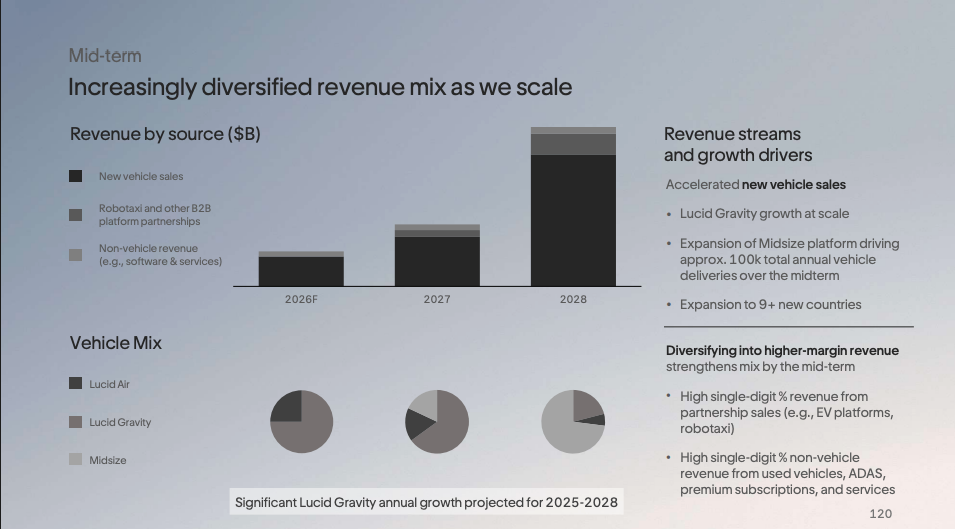
Alongside deliveries and sales of Lucid's EVs, by 2028, the startup expects a sizable portion of its revenu to come from robotaxi and other B2B platform partnerships.
Our Own Take.
Lucid pitched an optimistic, product-filled, and tech-obsessed future during its inaugural Investor Day celebration in the Big Apple. The arrival of a crop of mid-size crossovers of various flavors should, even amidst a particularly challenging environment for EVs, help bring new buyers to the brand who were otherwise steered away due to the higher costs of the flagship Air and Gravity. These consumers will soon have access to more desirable crossover bodystyles at more desirable sub-$50,000 price points, featuring all of the phenomenal tech and designed as foreshadowed by Lucid's first two products. It'll be a compelling chapter, to say the least. While top brass seemed eager to boost sales of its Air and Gravity as a result of Tesla discontinuing its somewhat stale Model S and Model X, recall that sales for both of of those vehicles absolutely plummeted right up until they were pulled from the lineup, especially as shoppers continue to retreat away from larger luxury sedans regardless of powertrain, though the Gravity, with its more traditional XSUV shape and user-friendly third row may see some conquesting traffic.
Committing so intensely to all things and everything autonomy, as we said, is a necessary move to ensure Lucid remains competitive, relevant, and in step with the momentum of other players in the industry. Data from our own AutoPacific research shows that future Lucid shoppers are indeed interested and willing to pay for greater levels of autonomy in their own vehicle, including to the maximum extent of the technologies' capabilities, where there's a complete absence of a steering wheel and driver control. This demand is considerably higher amongst Lucid shoppers than Tesla shoppers. Whether it be Level 2++ or Level 4, when prioritizing subscription-type services for autonomy, if consistent revenue is desired, Lucid must read the room amongst its buyers, ensuring there's flexibility in the terms and cost to acquire and use this technology.
Expectedly, there's potential for the robotaxi to blossom, too, though we're still shy when it comes to the explosive pace several companies are suggesting. Progress is being made as more robotaxi operators set up shop and send their (oftentimes) driverless vehicles out into the wild to peruse our cities, interstates, and suburbs, busily shuttling curious people around to their destinations while scraping data. Lucid's partnership with Uber is not only a helpful chance to secure additional funding, but a sign that many of today's leading pioneers in mobility do trust the process and do believe a fully autonomous future is looming closer and closer on the horizon. B2B partnerships are and will remain necessary for Lucid to recover its losses and enter into the 2030s with cash at hand, and we do hope that, beyond autonomy, other automakers, like Aston Martin, tap Lucid to share its leading software and benchmark EV drivetrain components.
Are we optimistic? Yes, but as we've seen within the past six to twelve months, there are a lot of outside factors, some expected, others not, that may either threaten or enhance Lucid's near-future prospects.