
Nissan Lays Out its Path to Recovery
By Ed Kim, President and Chief Analyst
Nissan’s path to recovery following its challenging and difficult rough patch has demonstrated solid progress over the past year. Sales are recovering in key markets, including the U.S., and the company has been making strides in reducing costs and finding efficiencies. Last week, Nissan shared its long-term vision that goes far beyond just returning to financial health, but focuses on key priorities to ensure its competitiveness in all of its global markets for the long run.
The key pillars are AI-powered autonomy and hybrid technologies, a more disciplined global product portfolio that categorizes its models into one of four roles, streamlining product development processes, and optimizing its approaches for its three biggest markets: the U.S., Japan, and China.
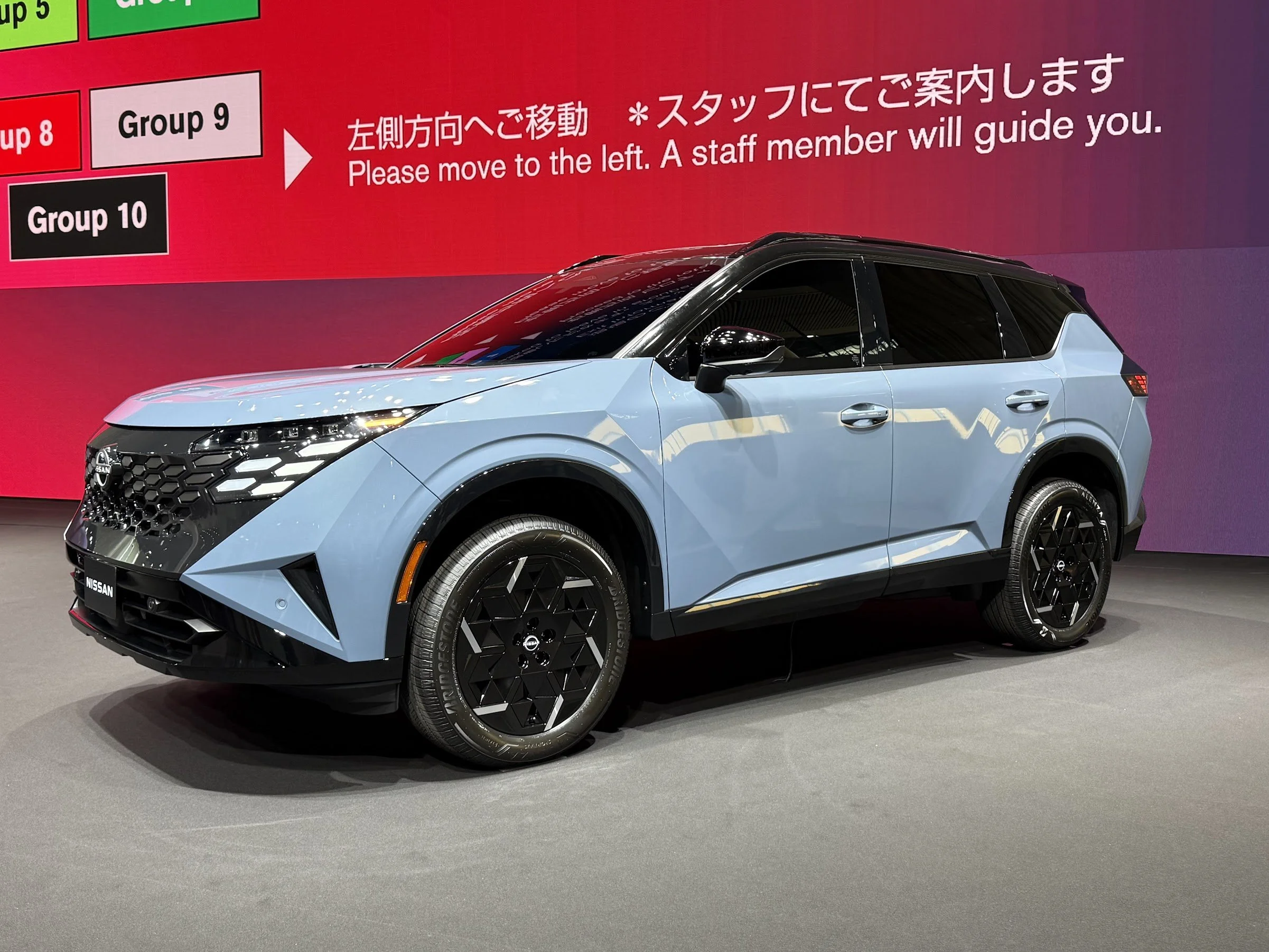
The 2027 Nissan Rogue debuts the company's e-Power series hybrid powertrain to the U.S. market
The most ambitious pillar, in AutoPacific’s view, is AI-powered autonomy. Through its recently announced collaboration with Wayve, the London-based AI autonomous drive innovators, Nissan will effectively integrate Wayve’s “brain” with Nissan’s “body”, as Tetsuya Iikima, Executive Chief Engineer for Nissan’s autonomous drive and SDV efforts, put it. Wayve’s autonomous drive brain is entirely edge AI, or localized in the vehicle without any connection to the cloud. It doesn’t require HD maps as Wayve’s AI, taking inputs from the vehicle’s array of LiDAR, radar, and cameras, is fully capable of figuring out complex urban driving filled with pedestrians and traffic. Nissan’s integration of Wayve’s AI into the vehicle’s drive systems makes it whole.
We received a 40-minute real-world demo driving in very congested traffic in and around the Ginza area of Tokyo, and while we have experienced multiple executions of autonomous urban driving, this was hands-down the smoothest driving and confidence-inspiring autonomous drive experience we’ve yet experienced. Nissan tuned it for smooth acceleration and braking, and it was able to navigate through many very tricky situations with zero input from Iikima, who sat behind the wheel but never touched it. It’s far smoother than the abrupt and aggressive acceleration and braking exhibited by Tesla’s FSD, and with its LiDAR and radar, it’s likely safer than Tesla’s camera-and-AI-only approach. In addition, Wayve’s AI is smart enough and has full knowledge of driving laws around the world so that it can drive anywhere without any further training.
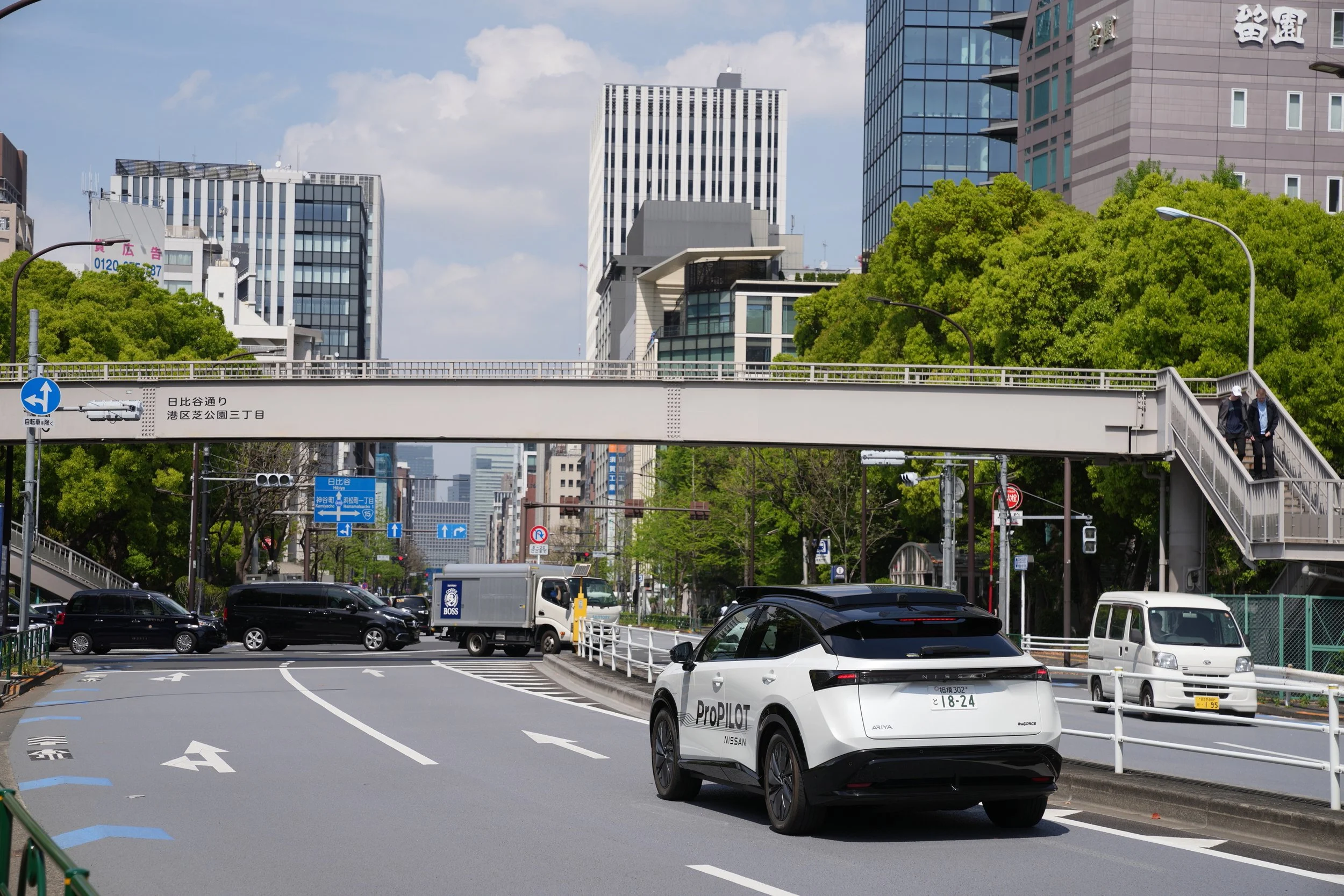
Nissan's ProPilot, developed in conjunction with Wayve, autonomously navigates the streets of Ginza
This level of fully autonomous point-to-point driving will be available by the end of Q1 2028, likely making Nissan among the first legacy brands to offer fully autonomous point-to-point driving. This is an important point as Nissan absolutely needs real product differentiators to set itself apart from its competition. Eventually, Nissan plans to deploy AI drive technology across 90% of its global lineup, ensuring that this is a scalable and high-volume endeavor.
Beyond AI-powered autonomy, Nissan will also be focusing on deploying its e-Power series hybrid technology in North America, along with V6 parallel hybrid technology across its upcoming body-on-frame truck and SUV lineup. This strategy represents a sharp pullback from its earlier aggressive efforts to sell a big variety of EV products in the U.S. at scale. Rather, its electrification focus will be on its hybrids, with e-Power for smaller and medium-sized models and the upcoming parallel V6 hybrid for its upcoming body-on-frame truck and SUV lineup. Given the flailing trajectory of EVs in the U.S., its new focus on hybrids - which Nissan is very late to in the U.S. - is a solid common-sense move.
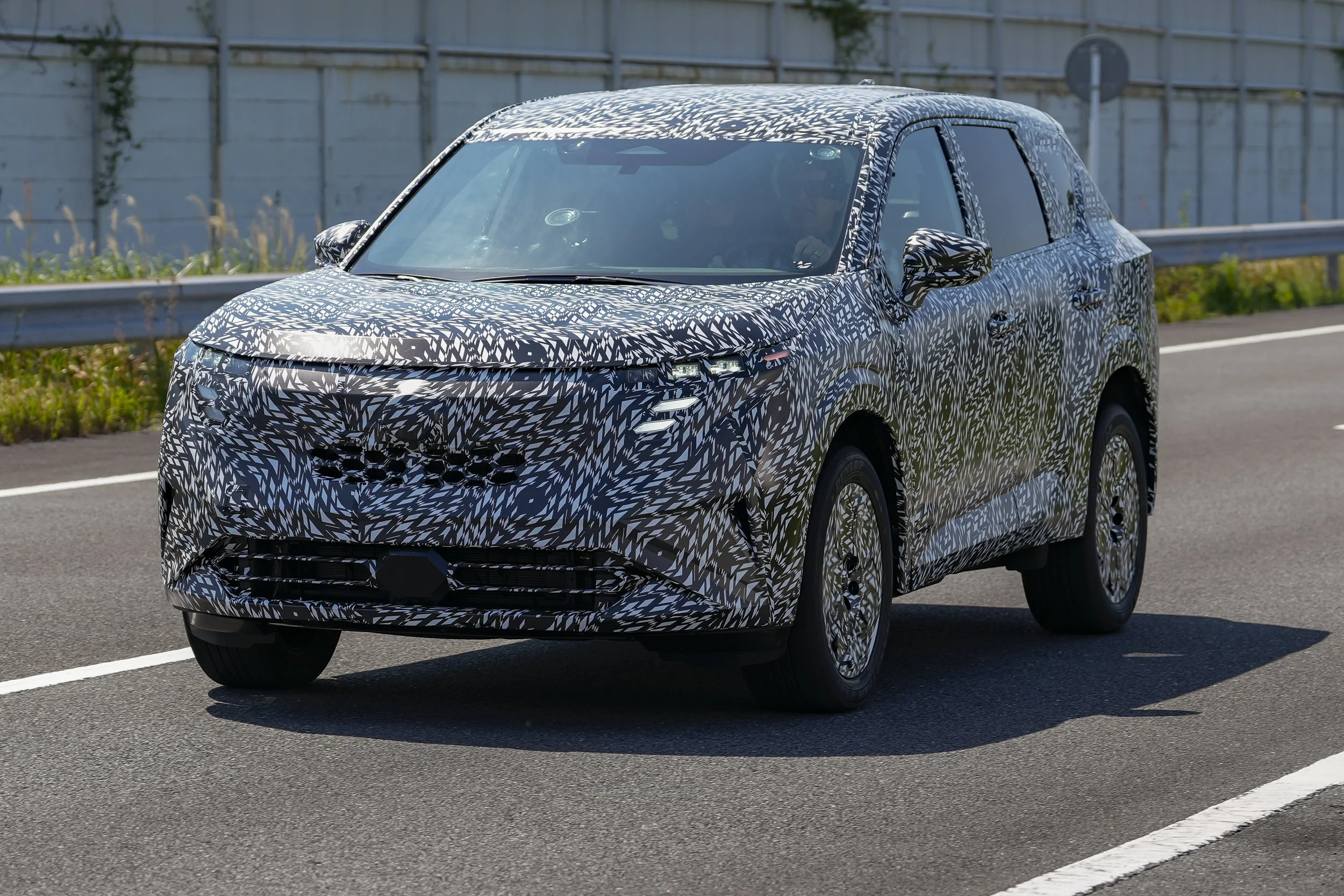
Driving the new Rogue Hybrid e-Power on the track reveals impressive quietness and an EV-like drive character
Those body-on-frame models also represent a sharp departure from Nissan’s earlier plans. The coming return of Xterra, which will offer the aforementioned hybrid V6, is a big deal for Nissan, and a new Frontier pickup, as well as a rumored rugged body-on-frame addition to the three-row Pathfinder family, demonstrate a renewed focus on tough truck products for the U.S., which always remain popular in this market. Infiniti will get two models on the body-on-frame architecture, too.
Nissan is also placing its models into one of four categories: Heartbeat, Core, Growth, and Partner. Heartbeat models represent the soul of Nissan and include vehicles like the Z and the upcoming Xterra. Core models represent high volumes that sustain the business and in the U.S. include the Rogue, which in its next generation that debuts later this year, will offer the e-Power hybrid in North America for the first time. Growth models expand Nissan’s reach into new areas of emerging demand, and Partner models extend Nissan’s reach with its various global partners. The latter is of particular interest as Nissan’s Chinese partner, Dongfeng, will have an expanded global role by exporting its Nissan-badged EV models like the N7 and NX8 outside of China to select markets, of which the U.S., of course, isn’t.
The automaker will also work to move to “architecture‑led development built on shared platforms, powertrains, and software”, as Nissan puts it. Rather than developing each new model on an ad hoc basis, new models will be developed more holistically with other models sharing hardware and software, cutting development times and getting new models to market more quickly. This is increasingly crucial in an era where leading Chinese automakers are proving they can now go from concept to market in well under three years. Speed is of the essence, and Nissan seems to understand that.
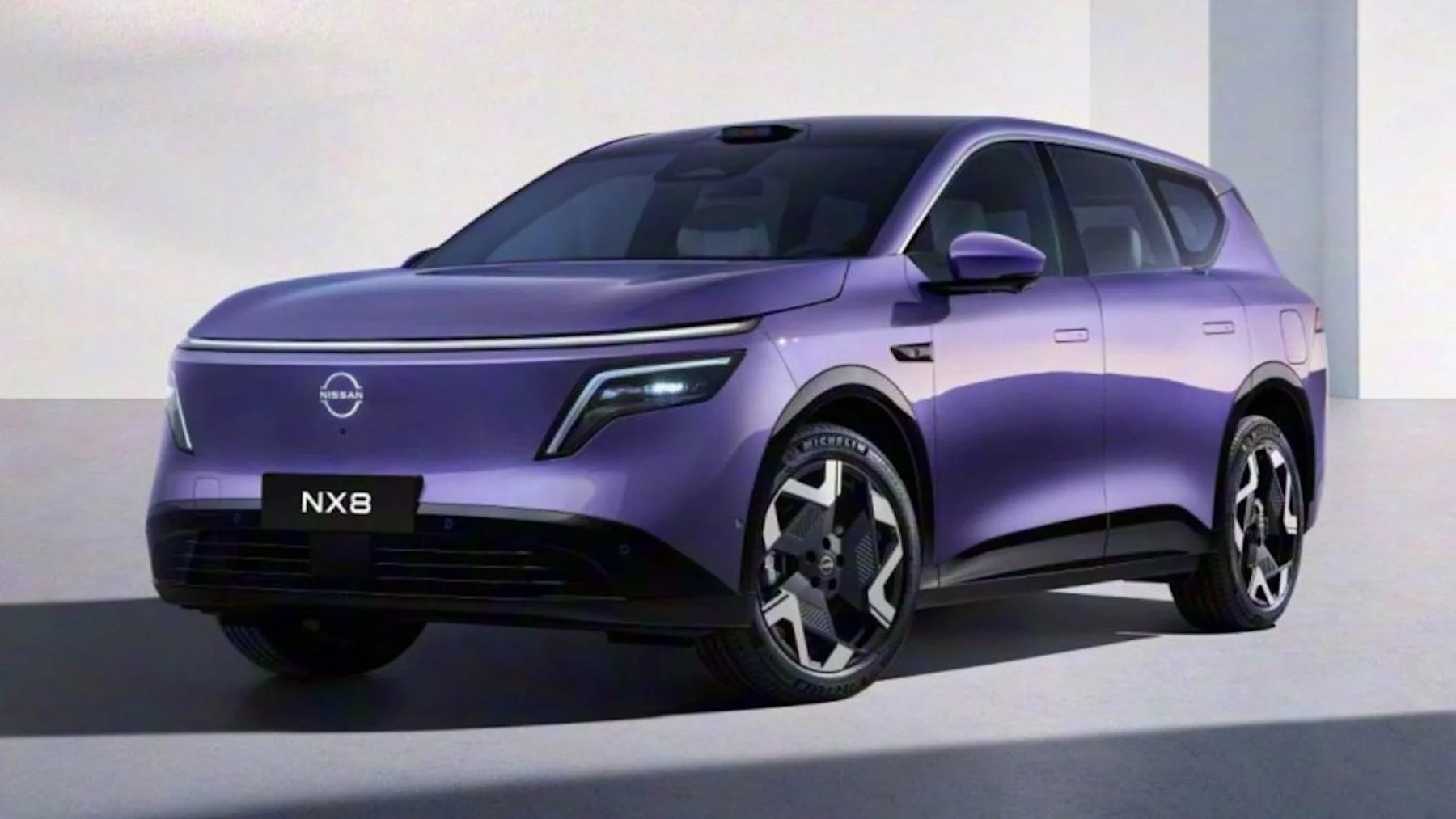
Nissan's Chinese-market models like the NX8, developed with its Chinese partner Dongfeng, will influence and inform the automaker's future product development efforts, ultimately to the benefit of Nissan's global portfolio
In the U.S., Nissan will use the above measures to reach one million annual sales by 2030 or 2031. Local manufacturing, a renewed focus on large body-on-frame vehicles, and deploying its two hybrid powertrain philosophies will be central to that effort. Infiniti won’t be ignored either as it introduces a new U.S.-built QX50 with standard e-Power hybridization sharing its platform with the next Rogue, a rear wheel drive sport sedan derived from Japan’s upcoming Skyline, and two body-on-frame hybrid SUVs.
Will it be enough? Certainly, the introduction of e-Power will help. Toyota RAV4 and Honda CR-V dominate the mid-size crossover segment and are among the top-selling vehicles in the U.S., due in no small part to their excellent hybrid powertrains, which are standard on RAV4 and the majority of CR-V volume. Our brief test drive of a prototype Rogue Hybrid e-Power on Nissan’s Grandrive test track revealed a far smoother and quieter drive experience compared to RAV4, whose powertrain sounds like gravel in a coffee can by comparison. The gasoline generator is quieter and more refined than the Honda’s gasoline engine in its series-parallel hybrid powertrain, which is many ways works similarly to e-Power. Combined with the new Rogue’s handsome styling, the next Rogue should make up a lot of lost ground as the current Rogue’s sales have been hampered by the lack of a hybrid powertrain.

The return of the Nissan Xterra will happen in late 2028, debuting an all-new body-on-frame platform that will spawn five future Nissan and Infiniti models and a new V6 parallel hybrid powertrain
The body-on-frame platform - an all-new architecture unrelated to that used in the larger Armada and Infiniti QX80 - is exciting too, and it is clear that Nissan sees Xterra as one of its saviors for the U.S. market. We saw a full-size model of the Xterra’s design as well as renderings of a longer three-row sibling, along with Infiniti derivatives of each. It’s bold and rugged, much in the way that the long-departed Toyota FJ Cruiser was, but wearing signature Xterra design elements. It will offer a parallel hybrid V6 option too, likely boosting both power and fuel economy. A big question remains though: with so many rugged SUVs arriving into the marketplace in the coming years, how well will Xterra and its platform siblings distinguish themselves? Can they generate enough volume in such an increasingly crowded space that already includes icons like Toyota 4Runner, Jeep Wrangler, and Ford Bronco, and quite a few more entries around the time Xterra arrives in late 2028?
The stakes for Nissan couldn’t be higher. Its most recent near-death experience nearly brought the company to ruins, and its prior strategy of selling on price rather than product didn’t help profitability or Nissan’s status among U.S. customers. Now, Nissan has a better vision of what it wants to be, and it has developed a roadmap to achieve those goals globally. Hybrids are finally coming, new and exciting products are coming, and perhaps most important of all, its efforts on bringing advanced point-to-point autonomy at scale within the next couple of years will likely give Nissan a real differentiator - something it really needs badly. Certainly, all eyes will be on Nissan in the coming years, and clearly, the stakes are high.