
What We Saw and Learned Touring Ford’s Secret Skunkworks Complex
By Robby DeGraff, Manager of Product and Consumer Insights
The blue oval's EV roadmap has found itself quite changed, in some ways expected, others unforeseen. Rewind to the start of the decade, and Ford Motor Company excitedly pitched plans for a storm of EVs for both its brands, including the electrification of familiar "icons" in the lineup as well as new additions. Partnerships were established (and some eventually broken up), funding secured, and millions, if not billions, have been committed and since rescinded for new tooling, new assembly plants, plus, of course, necessary EV propulsion development. Facing the turbulent reality that is today's diminished market for electric vehicles, Ford scaled back its push, pulling the plug on its F-150 Lightning and canceling EV models before their planned launch, such as a pair of larger battery-powered three-row crossovers whose outlooks were looking increasingly dim. Zoom in on Tennessee, where production of profitable, popular members of the F-Series family quickly became more of a stable priority, casting aside earlier efforts to build an electric pickup truck at Ford's plant in Stanton and instead concentrating on most upcoming EV assembly happening just north in Kentucky.
While we may be in the midst of an EV slowdown...that won’t be the case forever, and a secret army of engineers and designers is busily scrambling about in discrete warehouses tucked away in Long Beach, California, to come up with Ford's next crop of affordable, mainstream EVs go for launch later this decade. But in order for this new wave of EVs to be successful, a fresh approach has to be taken to address lingering consumer hesitations about EV adoption, including range, charging infrastructure, and cost. Enter the "Skunkworks" era.
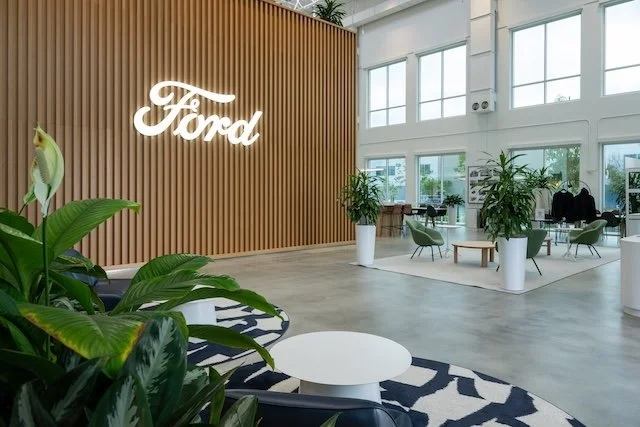
Ford returns to its Long Beach roots after a long hiatus, dating back to 1958 when the last Fairlane rolled off the line. Jump ahead nearly 70 years later, and what some may consider a critical chapter in the blue oval's history is being rapidly written. Last week, AutoPacific had the privilege of being invited to Ford's EVDC (Electric Vehicle Development Center) to tour the hub and grab a sneak peek at what the Skunkworks team is working on. Our first impression? Compared to a traditional R&D thinktank or manufacturing center one would expect from a legacy automaker, Ford's EVDC is simpler, brighter, and dramatically streamlined to ensure there's minimal lag in decision making and execution.
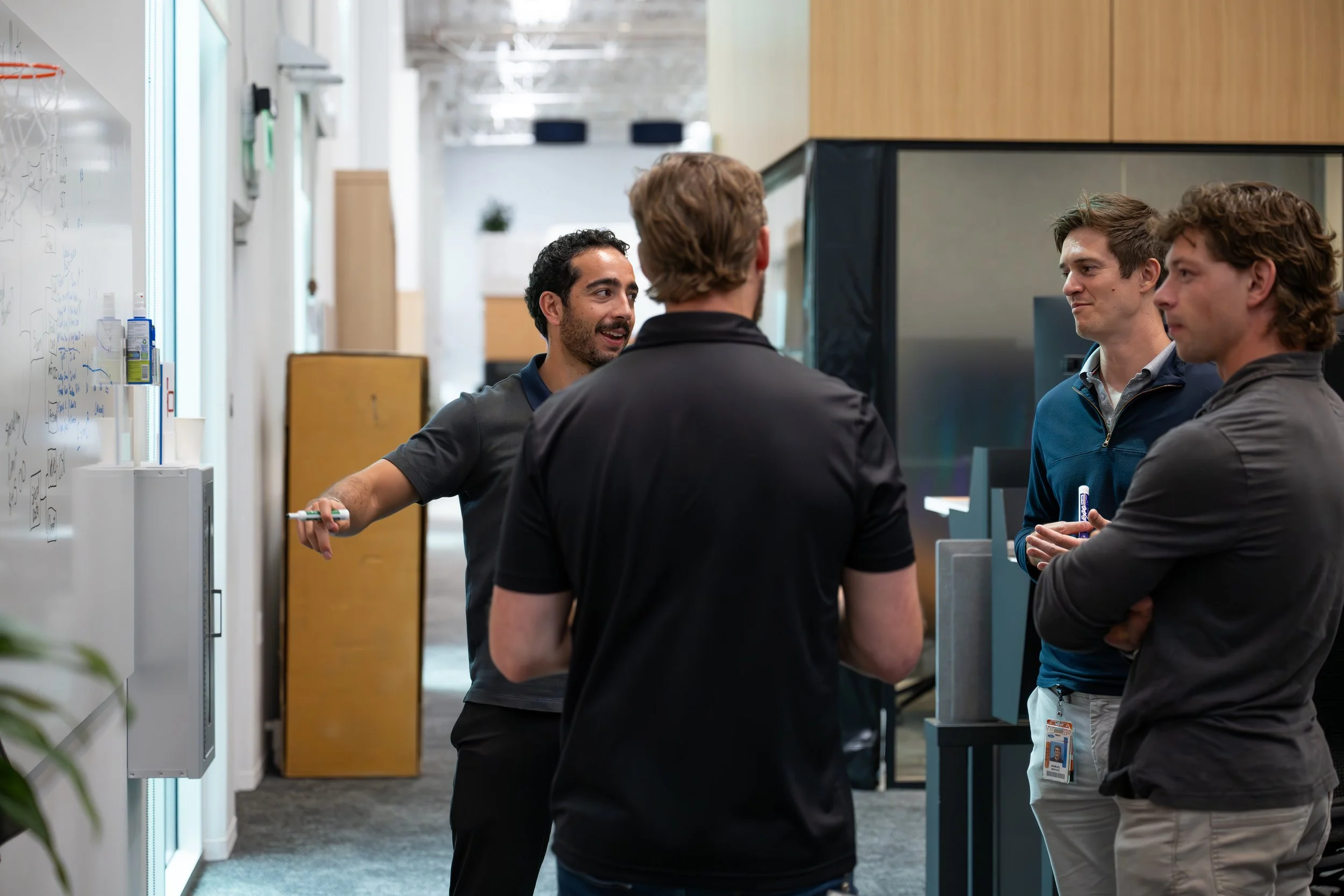
Walking through several massive facilities, where 350 workers grind away (altogether there's about 500 spread out based in California and Michigan), the overall encompassing ethos is that of a proper startup environment. In fact, when we asked what percentage of workers on the Skunkworks team were existing Ford employees and how many were brand-new to Ford, we were told just 10% were already employed by the blue oval. That means 90% came from other automakers and tech companies. The lead in charge of mastering range, performance, and battery systems modeling came from Canoo, as did the manager of the metrology team. Others jumped ship from Tesla, Apple, Nikola, Toyota, Argo AI, and Rivian, to name a few, all under the watch and direction of ex-Tesla Alan Clarke, who is leading the moonshot. With Clarke at the helm, Ford is dramatically attempting to change how it's designed and built automobiles for the past century, and the influence is clearly China.
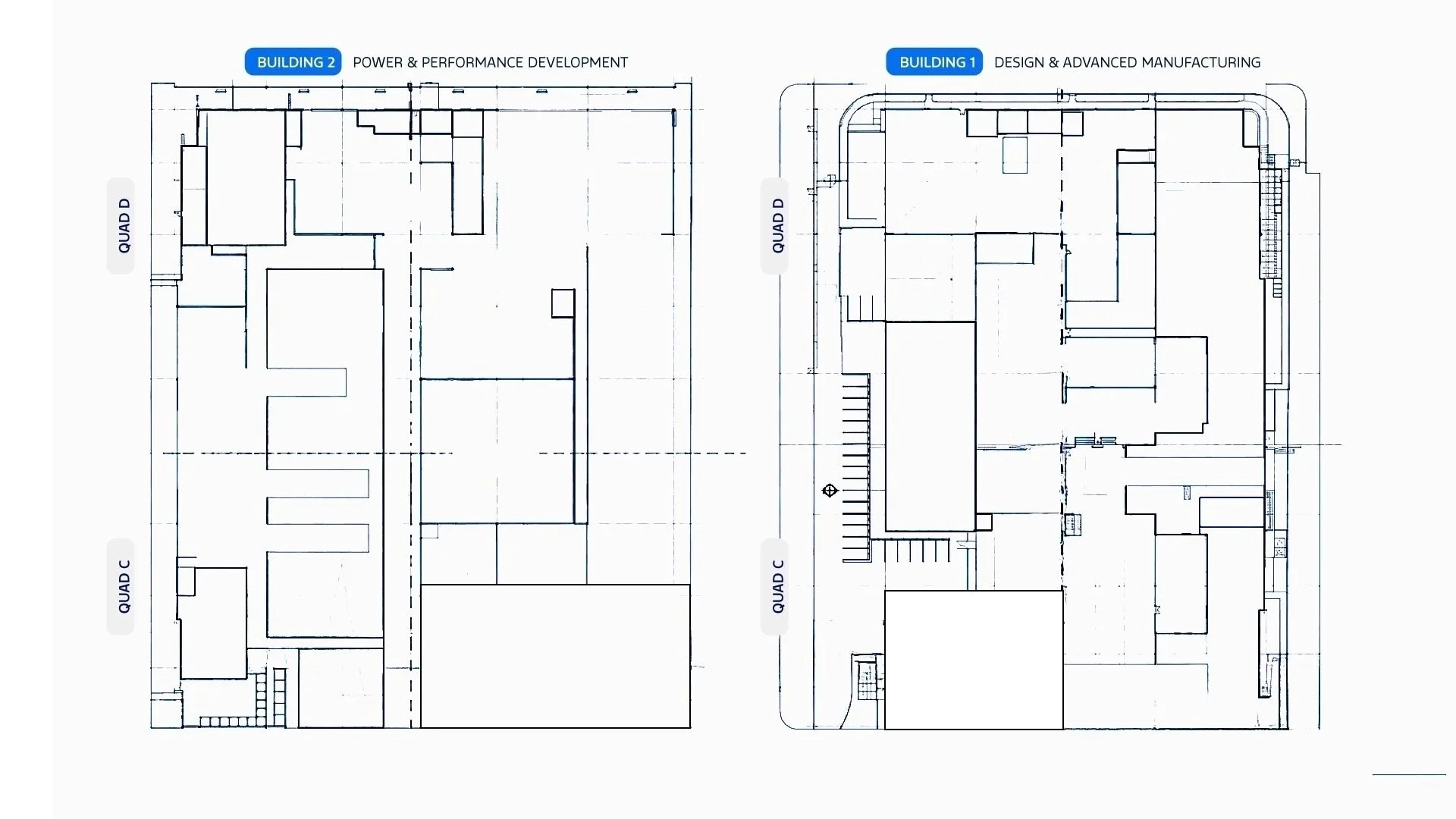
Whereas storied automakers require long, drawn-out cycles to cook up a new idea and send it into production, brands in China (and a few select startups here on our shores like Rivian and Lucid), expedite the entire vehicle development process from start to finish. The strategy? Keeping things as lean as possible and just plain simple. From drafting a front fascia and determining appropriate seat upholstery to tweaking wiring harnesses and thermal testing of battery packs, Ford is trying to accomplish all of this in-house at its EVDC. Being able to collaboratively brainstorm ideas, parts, and components in one room...then put them to the test almost immediately right down the hall... allows for the Skunkworks team to either fail fast or succeed swiftly, with the result being either green-lighted for go-time or sent back to said nearby thinktank for revision. There's little to no unnecessary waiting games and weeks (if not, months) of transcontinental decision-making chaos when everything happens under one roof.
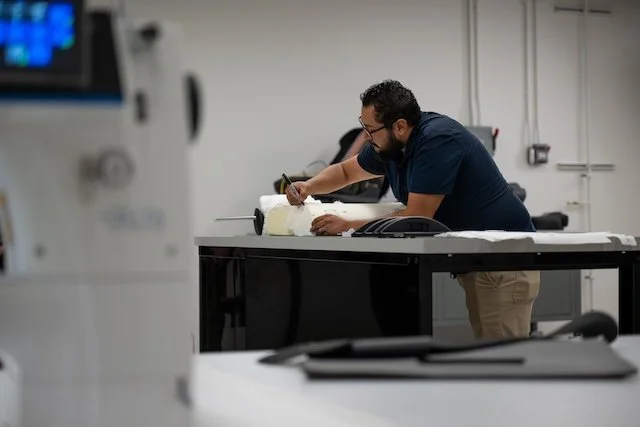
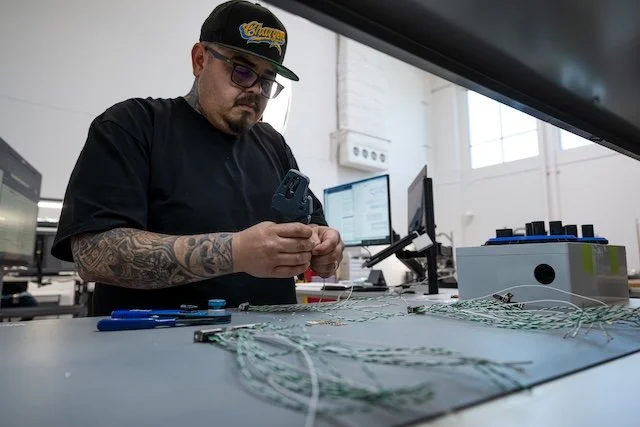
Prototypes, whether for switchgear and tailgates or full-blown HVAC housing, can be 3D-printed in one room and then literally walked (after several swipes of security cards based on varying levels of access, of course) to another to evaluate their integrity. During a 5-minute stop in the dedicated metrology room, a hypothetical subwoofer was undergoing its own CT scan, like you'd see in a hospital, checking for imperfections. This caliber of quality control saves not just time and cost, but materials too, aiming to eliminate unnecessary waste. Creations, modifications, and adjustments can be made on the fly, right at EVDC. For example, while looking over a myriad of connectors, thick rolls of wires, and other plastic bits and pieces, speaking with the Skunkworks team's Lead Integration Technician, we learned his crew has answered more than 1,400 requests for new wiring harness components, all done in that room.
This whole lean approach can also be best summed by unpacking the new UEV (Universal Electric Vehicle) underpinnings itself, which will serve as the platform for not just the soon-coming $30,000 Maverick-sized pickup, but other bodystyles and key segments as well. We strolled past a wooden mockup of a swoopy three-row crossover, and counted five additional cloaked vehicle prototypes, including one with a noticeably boxy Bronco Sport-esque silhouette (thought it may very well have been wearing additional camouflage) and, tucked away in a distant corner, a shape that clearly resembled a sedan or hatchback...coincidentally parked across the floor in the design studio from a 1960s Ford Escort rally racer. A foreshadowing of the return of an affordable Focus?
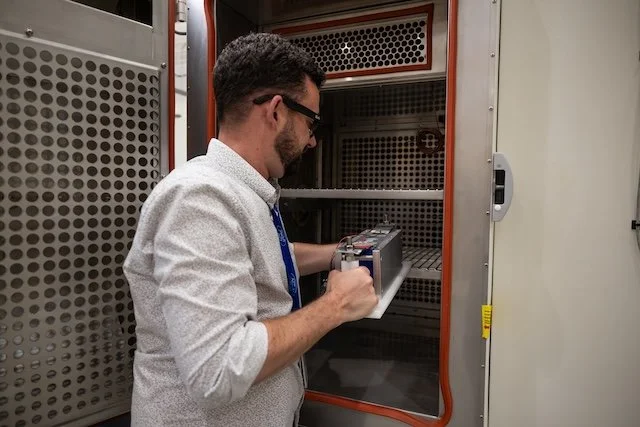
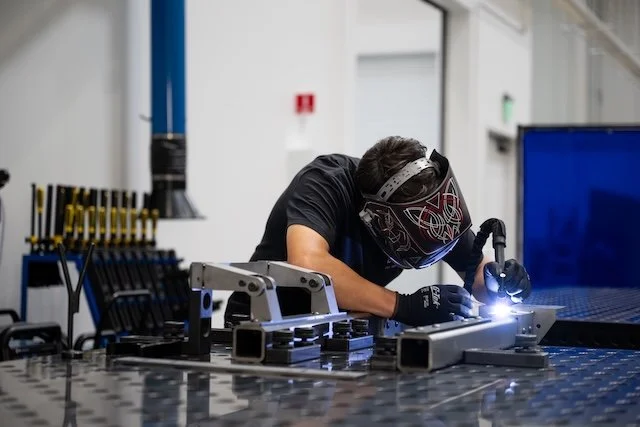
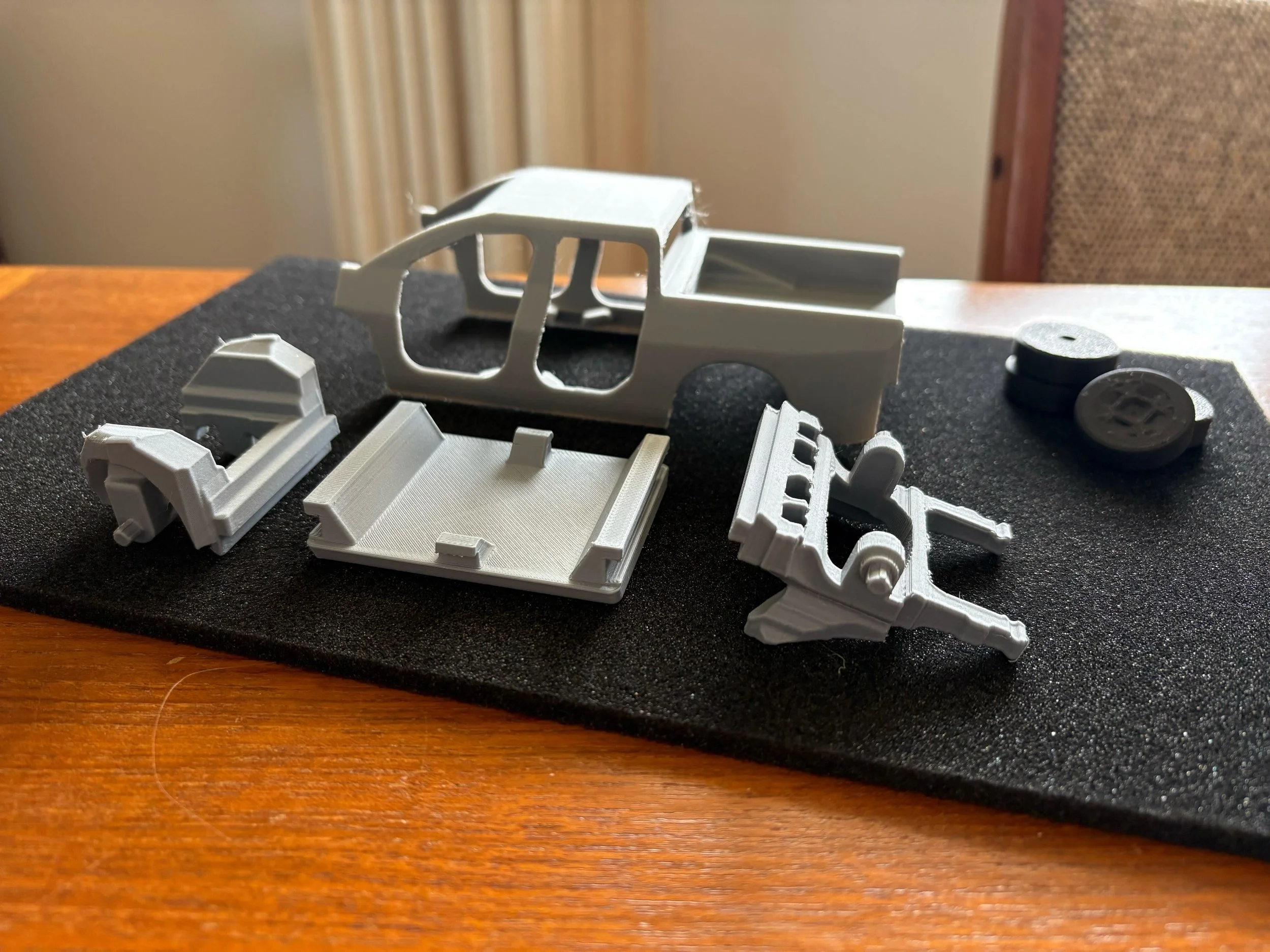
At its core, and as demonstrated via a scale model given to us after the tour, the UEV platform consists of only a handful of pieces: the aluminum front and rear subsections, which bookend a smaller LFP battery pack (a smart, cost-effective chemistry) and subframe. With the skeleton complete, the floor-less top hat is dropped onto the chassis, and your entry-level EV comes to life thanks to unicasting. Similar to Lucid's upcoming trio of mid-size, attainable EVs, Ford touted the benefits of unicasting, like reduced repair costs and insurance rates thanks to drastically fewer parts, fasteners, and joints to mesh it all together All of this, too, consequently, warrants less stress and strain on those actual human workers on the line putting together these UEV-based entry-level EVs. See the trend here? Simplicity.
120 minutes and thousands of steps later, we exited another warehouse on the EDVC property back out into the California sunshine, only to catch a (scripted) glimpse of a camouflaged prototype of said $30,000 electric pickup truck driving up and away out of sight, our first real preview of this yet-to-be-named Maverick-sized EV counterpart. Referencing that 30-second visualization with the aforementioned scale model and various bucks we were shown throughout the complex, we now have somewhat of a clearer picture of what to expect when production begins later this year in Louisville (as confirmed to us during our tour).
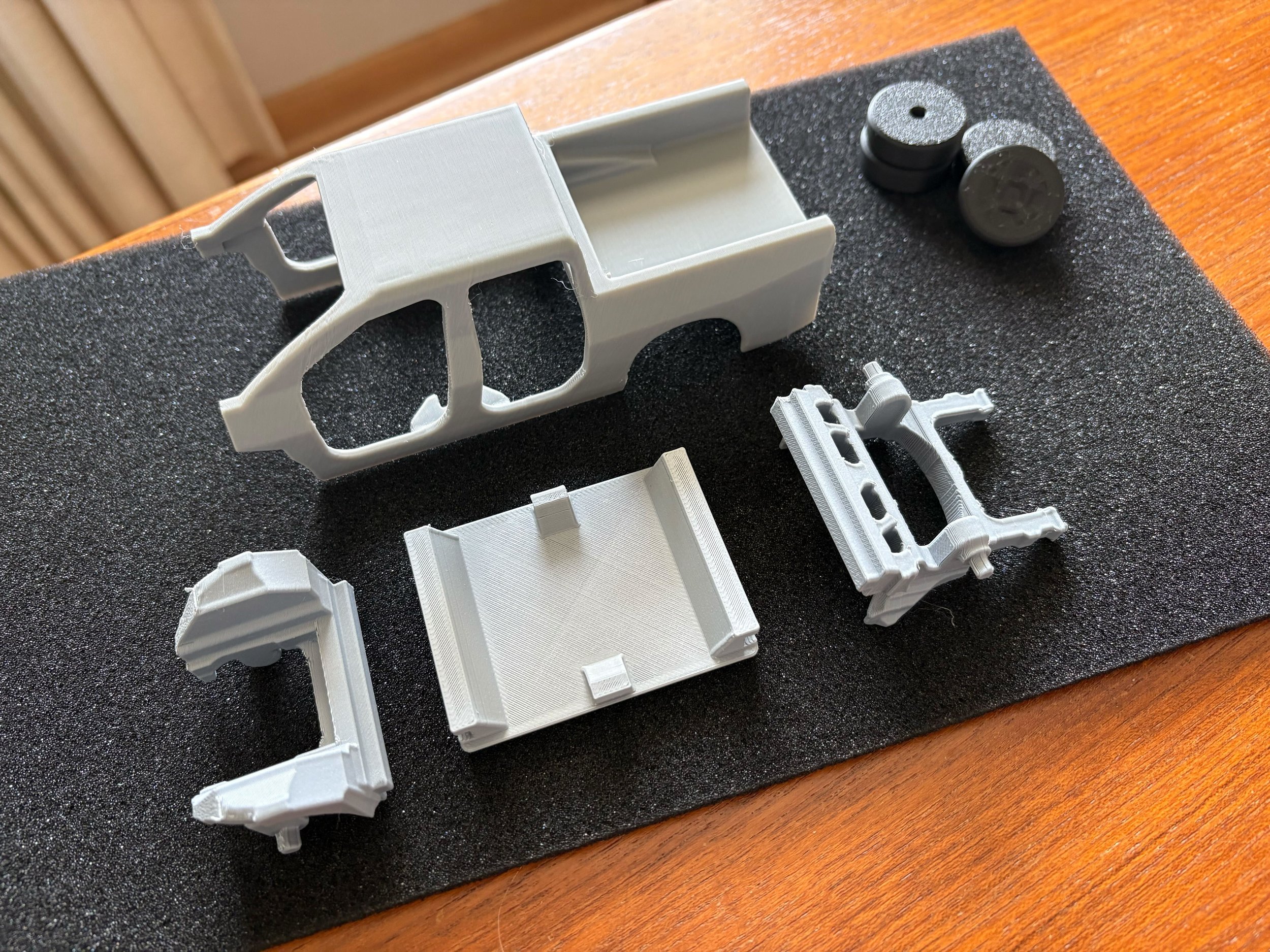
As we said, the first Skunkworks team EV appears to be a mirror of our current gas and hybridized Maverick, albeit with much longer doors, a more aggressively raked front windshield, and tall bed sides that almost angle inward toward the bed itself. It'll be, as confirmed by one of the designers, fresh and new from the ground up, with no carryover parts borrowed or shared from within the existing Ford ecosystem. The critical ingredient to keeping this smaller new pickup truck's (and others to follow) MSRP within a desirable reach of EV-curious shoppers will, of course, be its in-house designed aforementioned battery pack, which trades big range numbers and fast charging speeds (400V here versus an 800V architecture) for efficiency, compact sizing, and the more attainable and scalable lithium-iron phosphate chemistry. Ford reaffirmed its perfecting the battery packs for its slew of new budget-friendly EVs, given that upwards of 40% of the entire vehicle development cost accounts for that battery pack.
This all seems promising on paper, and what was demonstrated to us during our curated tour of the EVDC. The mood, confidence, and operations appear bright, not just in the sheer, almost refreshingly modern and clean-cut approach to designing, developing, testing, and executing this next lineup of EVs, but also in conversations and dialogue had with the Skunkworks team. Even if much of what we saw in the sprawling array of big, open rooms and warehouses was either still under construction, hidden behind plastic-wrapped walls of plywood.
But whether or not the blue oval can successfully navigate this new "startup" approach it's brazenly taking, cosplaying (to an extent) how many of today's cutting-edge Chinese automakers are pushing exciting, tech-rich EVs out the door to eager consumers at a record pace, is still TBD. Can Ford pull this off and scale the results of its Skunkworks chapter not just quickly enough to meet demand but sans the threat of recalls and quality issues? This is certainly a make-it-or-break-it moment.