
Lexus Takes a Bold Dual-Powertrain Approach for its All-New 2026 ES
By Robby DeGraff, Manager of Product and Consumer Insights
Out with the LS, in with the all-new (and much bigger) ES, which arrives for 2026 as the brand’s flagship sedan. While past generations of the ES have attracted the likes of older buyers seeking more of a reserved, familiar vehicle ownership experience, the eighth-generation ES seems like a 180-degree pivot. Now, Lexus is aiming for the younger, more tech-ambitious, and electric-curious crowd with a dual-powertrain strategy for its mid-size ES, which can be had in either hybrid or pure BEV formats. I recently had a chance to drive multiple flavors of the redesigned ES, and though both powertrains were impressive in their own respective manner, the EV is the one to buy.
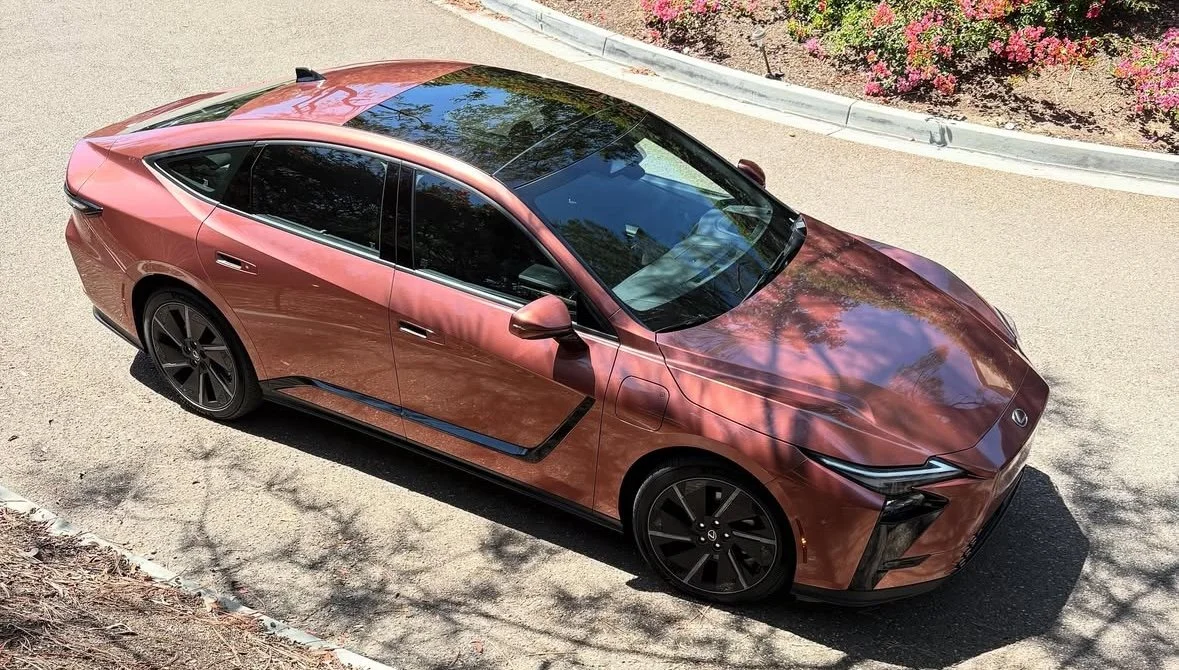
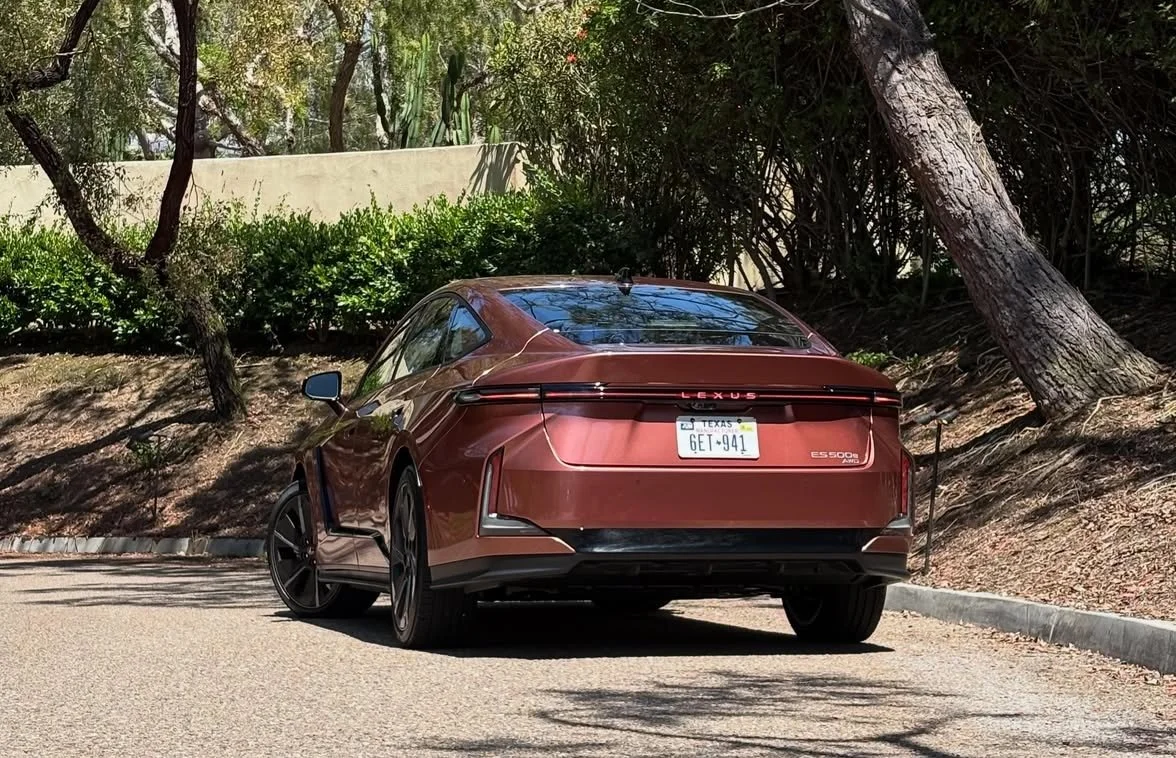
Before touching on the sedan’s on-road behavior, I want to share a few thoughts about the eighth-generation’s design. The newest ES loses its more conservative, perhaps sleeper looks for styling that, I think, appears much more youthful and modern. The ostentatious spindle grille is gone, replaced by a monotone face with thin LED headlamps, and I really fancy the pronounced character line deeply chiseled into the side profile, starting below the mirrors and running to the lower corners of the rear quarter panel. The ES’s rear fascia isn’t loud or busy, with the brand’s script stretching across a thin wraparound taillight bar. Overall, its roofline almost tricks one into assuming the ES may be a liftback, but alas, there is a traditional trunk lid. Compared to other luxury makes, Lexus still isn’t shy about vibrant paint palettes, and the latest generation keeps the color swath exciting with bold choices like copper and a light blue. Let’s hope an iteration of Nori Green gets added later.
Inside, the interior is undoubtedly the biggest departure from a design perspective, and at first glance, Lexus might be trying to cosplay Tesla a bit. That’s not a bad move, especially if the median buyer age needs to be dropped. Surrounded in higher-rent materials like a stunning optional bamboo wood inlay on the doorcards, the cabin layout is clutter-free, with a single large 14-inch screen running Lexus’s newest and improved infotainment, near a compact screen perched ahead of a new steering wheel, also bearing the brand’s script spelled out. The frustrating touch-haptic multi-function pads on either corner of the steering wheel have been thankfully eliminated, allowing for easier adjustment of the digital gauge cluster, and while a hefty portion of physical switchgear is missing in action, there’s still a row of haptic surfaces for adjusting some HVAC, along with a dedicated volume roller. Unfortunately, the majority of frequently used comfort and audio functions are done via taps and swipes. Fear not, Lexus’s revamped infotainment is excellent, and way more user-friendly, quicker, more accessible with bigger fonts and icons, plus customizable with various shortcuts and tagging of favorite menus or features.
So inside and out, top to bottom, the eighth-gen ES looks younger…but do the dynamics feel younger? The ES has never been a real "driver's car"; that's the sporty IS's role, but new mechanical improvements down below help a lot. The standard hybridized 2.5L four-cylinder, offered in FWD or AWD footprints (the latter adding a third electric motor on the rear axle), makes about 244 HP and can return upwards of 48 mpg. Toyota and Lexus hybrids have historically been adequate at their jobs: providing enough acceleration and pep to scoot around town or onto the highway while returning high fuel economy. Thankfully, all hybridized ES units adopt Toyota’s greatly refined sixth-generation hybrid system, which, behind the wheel, really cuts down on the noisy, harsh transition between gas and electric propulsion, resulting in much more tolerable operation, particularly when puttering around La Jolla’s coastal downtown, where there was so much stop-and-go.
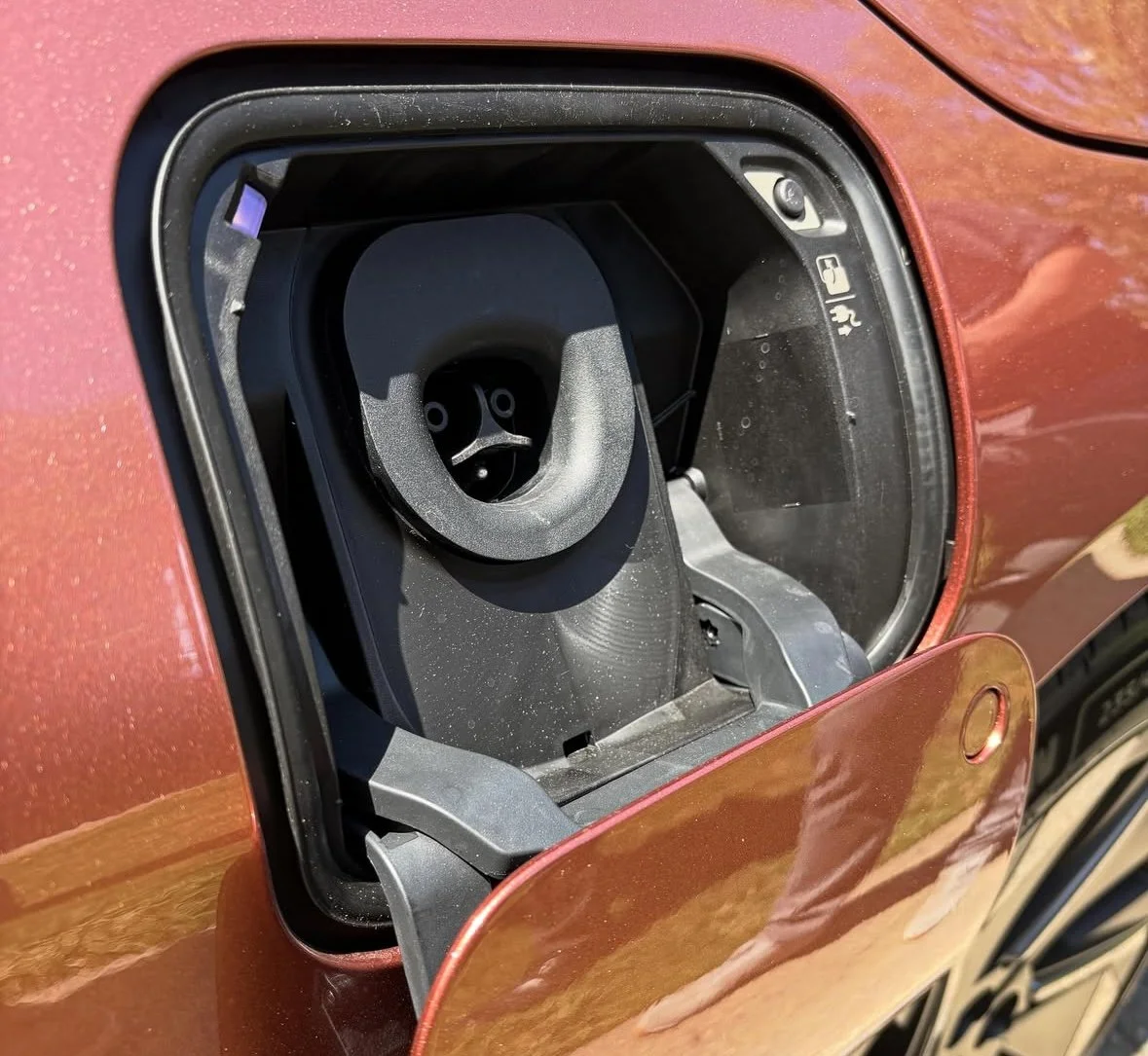
The one to get, not just because its MSRP is actually cheaper from the get-go (about $2,200 less than a base ES 350h hybrid), is the BEV. While I found both hybridized and electric versions of the new ES to be equally pleasant to pilot, with precise steering and a quiet, cozy ride (except if ordered with larger rims)…the total smoothness of the ES 350e or ES 500e cannot and should not be ignored if cross-shopping. Though I missed having the ability to toggle aggressive regenerative braking and one-pedal driving, both EV versions of the ES proved to be so very comfortable and relaxing. Even riding shotgun in the front passenger’s seat, my tall, lanky 6’2” frame had miles of legroom to spread out. Currently, the ES 500e, with its 338 HP dual-motor footprint and 5.1-second jump to 60 mph, is billed as the athlete of the two BEV versions, but I found the regular ES 350e to be plenty quick. The ES 500e’s launches are more than enough to gently push you into the seatback, and I anticipate the arrival of an eventual F SPORT model that will hopefully borrow the RZ 500e F SPORT’s simulated gear shifts, bigger brakes, and tighter suspension tweaks. On paper, too, the EV stats are, I believe, pretty solid: upwards of 307 miles of range, a standard NACS port enabling a 10-80% charge in about the time it takes to stop and grab a mug of coffee, and vehicle-to-load capability to offload power. The infotainment system, again remastered, houses a plethora of settings to fine-tune the battery for preconditioning and charging, route planning, and even a real-time meter showing the NCM lithium-ion pack’s state of health (not just range or percentage of charge).
The sedan scene is an interesting one at the moment in our industry, as some automakers retreat while others stay committed. Sure, luxury shoppers are craving higher-riding, more profitable crossovers and SUVs…but the conventional sedan still remains a desirable product amongst many, especially younger buyers who are indeed more accepting of powertrains beyond straight gas and hybrid. That’s where the dual-powertrain strategy could prove to be a winner here for the latest ES.
We'll see what happens.